Carpal Tunnel Syndrome (CTS) has become one of the most common—and most frustrating—work-related injuries we see in Snellville. In simple terms, CTS happens when the median nerve, which runs through a narrow passage in your wrist called the carpal tunnel, becomes compressed or irritated. When that nerve is pinched, it leads to numbness, tingling, weakness, and pain in the hand and fingers.
Work-related strain is one of the leading causes of carpal tunnel. Whether you spend your day typing, lifting boxes, using vibration-heavy tools, or performing repetitive motions, the tendons inside the wrist can become swollen or inflamed. As these tissues thicken, the already-tight carpal tunnel space becomes even narrower—putting direct pressure on the nerve.
If you’re experiencing numbness, tingling, hand weakness, dropping objects, or pain that wakes you at night, you’re not imagining it—these symptoms are real, and they’re common.
But here’s the good news:
With the right diagnosis and least-invasive treatments, carpal tunnel can improve—often dramatically. You don’t have to push through pain or assume surgery is the only option.
Our diagnostic process includes a detailed assessment designed to pinpoint the exact location and cause of nerve compression.
We discuss your job tasks, workstation setup, daily activities, and how your symptoms have progressed.
We observe how your wrist, elbow, shoulder, and neck move to determine whether symptoms originate from a specific joint or nerve pathway.
Weakness in certain movement patterns provides key clues about median nerve function and severity.
When needed, we use advanced tools to confirm the diagnosis and design the most effective treatment plan.
Measure the electrical activity of the median nerve to determine if and where compression is occurring.
A non-invasive, real-time view of tendon swelling, carpal tunnel narrowing, or structural abnormalities.
Neck issues can mimic carpal tunnel symptoms—so can diabetic neuropathy or ulnar nerve compression. Accurate diagnosis ensures we treat the right problem.
Physical and occupational therapy remain foundational treatments for work-related carpal tunnel syndrome, helping to relieve symptoms while preventing future flare-ups.
Gentle, guided movements that help the median nerve slide smoothly through the carpal tunnel, reducing irritation and improving mobility.
Focused exercises strengthen the forearm and wrist muscles that support healthy nerve function and reduce pressure on irritated structures.
Improper lifting, typing, gripping, or tool-handling techniques can worsen symptoms. PT and OT teach ergonomic strategies that protect the wrist during daily work tasks.
Tight flexor muscles and weak stabilizers often place additional strain on the median nerve. Therapy restores balance so that the wrist can function without excessive tension.
Hands-on therapy plays a powerful role in relieving carpal tunnel symptoms—especially when muscle tension and inflammation are driving nerve compression.
These muscles attach to the wrist and can create excessive pressure when they become tight or overused.
Gentle soft tissue work increases circulation, bringing oxygen and nutrients to the irritated median nerve.
This targeted, precision-based approach reduces swelling and muscular tightness, allowing the wrist to move more freely and comfortably.
Simple changes in how you support your wrist throughout the day—and especially at night—can dramatically reduce symptoms.
Nighttime is when many people bend their wrists without realizing it, worsening nerve compression. A neutral-position wrist brace keeps the tunnel open and prevents morning numbness.
Lightweight braces provide added support during typing, lifting, scanning, or tool use, helping to minimize strain on the median nerve.
Small adjustments to desk height, chair position, tool angle, or keyboard design can significantly reduce wrist stress.
Power tools, handheld equipment, and scanning devices can all aggravate CTS. Ergonomic coaching ensures safer, more efficient movement throughout the workday.
When inflammation is significant, injections offer fast, direct relief by creating more space for the median nerve.
These reduce swelling inside the carpal tunnel, often providing noticeable improvement within days.
Using ultrasound or fluoroscopy ensures the medication reaches exactly where it’s needed—maximizing relief while minimizing risk.
By lowering inflammation, injections relieve pressure on the nerve, making it easier to grip, type, and perform daily tasks without pain.
Regenerative medicine focuses on repairing injured tissues rather than masking symptoms—making it especially valuable for chronic or recurring carpal tunnel syndrome.
PRP uses the patient’s own concentrated platelets to promote healing in irritated tendons and soft tissues surrounding the median nerve. This reduces inflammation and supports long-term recovery.
Biologics may help calm inflamed tissue within the carpal tunnel, creating more space for the nerve and reducing pain, numbness, and swelling.
For patients who have had symptoms for years—or whose symptoms return frequently—regenerative treatments can offer relief when traditional methods haven’t been enough.
Hyperbaric Oxygen Therapy is an innovative treatment growing in popularity for nerve-related and repetitive strain injuries.
HBOT saturates the bloodstream with oxygen, helping damaged tissues heal more efficiently.
Healthy oxygen levels promote nerve regeneration and calm persistent irritation, two key factors in relieving CTS symptoms.
HBOT is especially effective for workers in manufacturing, healthcare, or construction who experience ongoing wrist strain and inflammation.
Medici Orthopaedics & Spine prioritizes a least drug-dependent approach, using medications strategically—not as a long-term crutch.
Short-term use of NSAIDs or medications that calm nerve irritation can provide helpful relief while other therapies address the root cause.
Opioids do not address carpal tunnel inflammation and are not recommended. Our goal is to relieve pain without unnecessary risks.
Medication is used as a bridge—not a solution—so patients can benefit more fully from therapy, bracing, ergonomic changes, and regenerative treatments.
While most patients experience relief through non-surgical care, there are cases where a minimally invasive procedure becomes the best next step.
If the nerve remains compressed even after therapy, injections, and ergonomic adjustments, a minimally invasive release may be recommended.
These modern techniques use tiny openings rather than large surgical cuts, dramatically reducing healing time and scarring.
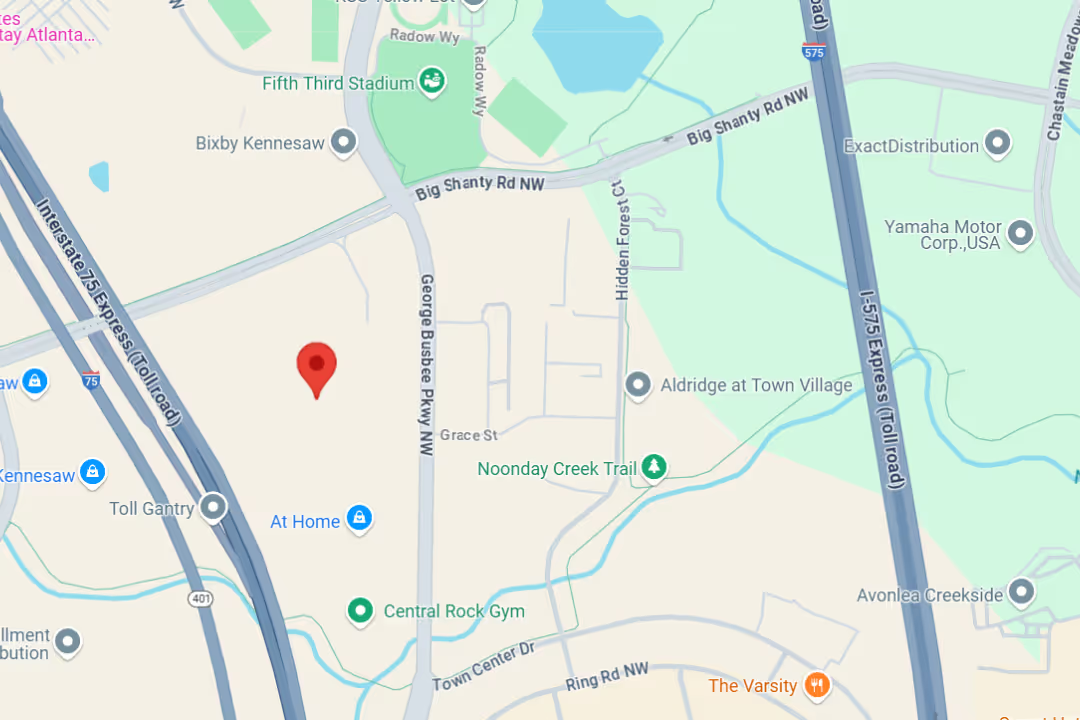
Our Snellville and Marietta ASCs offer a comfortable, high-tech environment designed for same-day procedures and rapid recovery.
Carpal tunnel syndrome can be frustrating, painful, and disruptive—but it does not have to be a lifelong condition. With today’s advanced, least-invasive therapies, many patients experience meaningful relief without needing surgery. The key is getting the right diagnosis early and choosing treatments that target the true source of nerve compression and inflammation.
At Medici Orthopaedics & Spine, we provide modern, evidence-based solutions that address both the symptoms and the root causes of carpal tunnel. Our goal is to restore your comfort, improve your function, and help you return to work and daily activities with confidence. You deserve hands that feel strong, steady, and pain-free—let us help you get there.
2220 Wisteria Drive, Unit 101
Snellville, GA 30078
(470) 645-9297
At Medici, you’re more than your MRI.
We take time to hear your story, understand your pain, and create a plan that actually works for you.

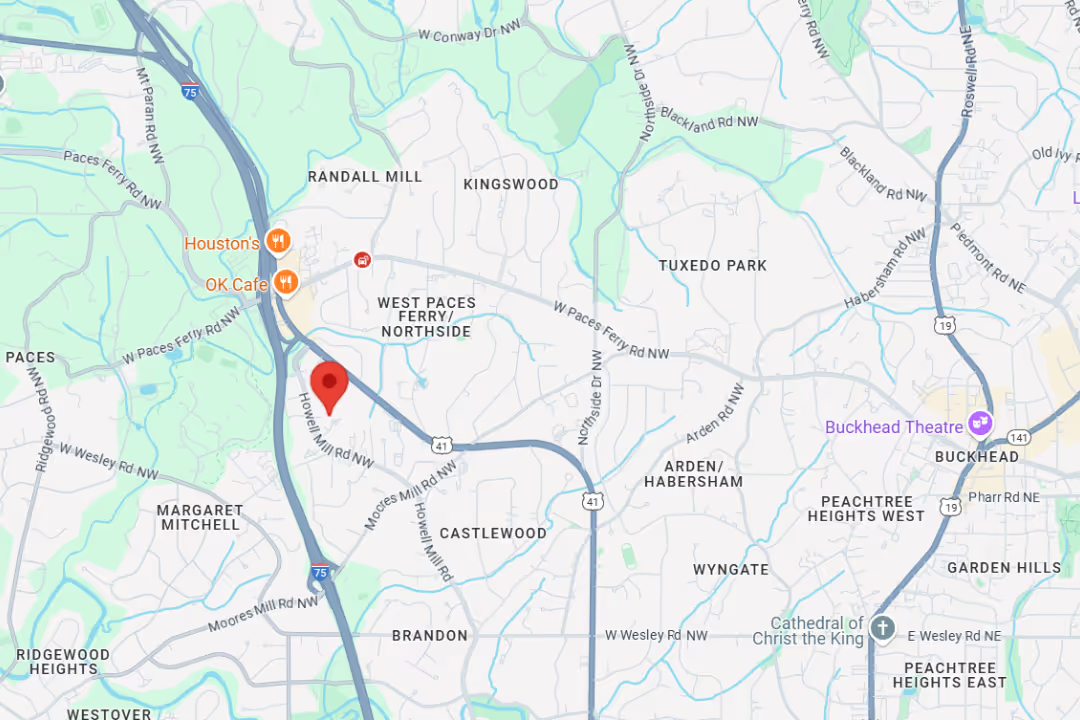
Our team delivers specialist care at convenient locations across Metro Atlanta:
Get expert tips on injury recovery, pain relief, joint health, and movement strategies—straight from our Fellowship-Trained team.