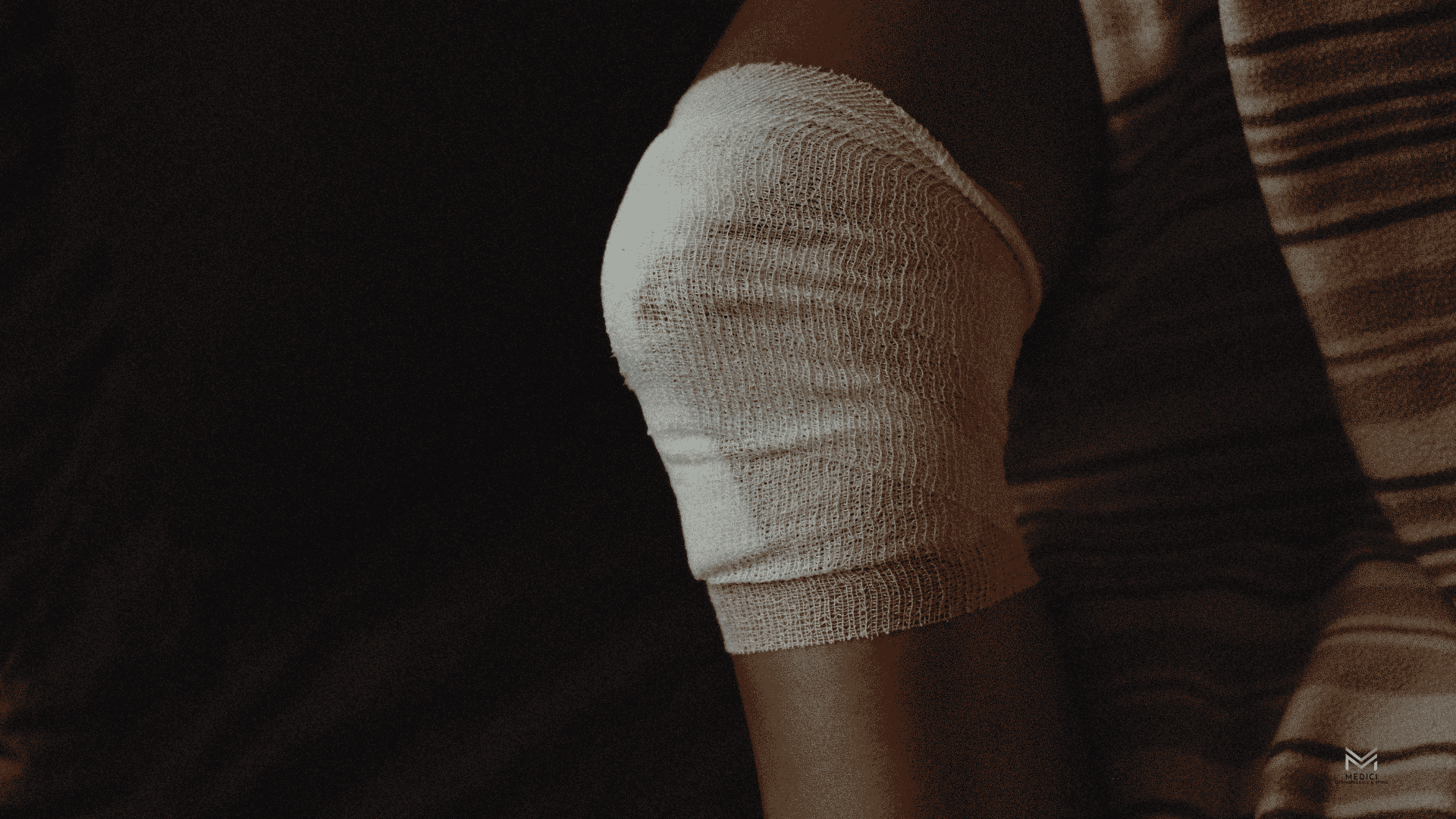
Knee pain has a way of becoming background noise. At first, it's the occasional ache after a long walk or stiffness when you get up in the morning. Then, gradually, it starts showing up in places it didn't before — climbing stairs, getting in and out of the car, sitting through a movie. Before long, you're rearranging your life around your knee instead of the other way around.
For many people, that slow progression is what eventually brings them to a conversation about knee replacement. It's a question that carries real weight. Surgery isn't something anyone takes lightly, and the idea of a major joint procedure can feel overwhelming, especially when you're not sure whether you've run out of other options or whether your pain is "bad enough" to justify it.
The truth is, knee replacement is one of the most studied and consistently successful procedures in orthopedic surgery. When it's performed at the right time, on the right patient, by the right team, outcomes are excellent. The challenge is getting the timing right and making sure surgery is genuinely the best path forward, not just the next step on a list. That's where thorough evaluation and experienced, conservative-first guidance make all the difference.
Knee replacement surgery, also called knee arthroplasty, removes damaged cartilage and bone from the knee joint and replaces them with artificial components designed to replicate natural knee function. For most patients, this means relief from the bone-on-bone friction and inflammation that has been driving their pain.
The two most common procedures are total and partial (unicompartmental) knee replacement.
Today's knee replacement procedures have advanced considerably. Minimally invasive techniques, improved implant designs, and computer-assisted surgical planning have made the procedure more precise and recovery more predictable. Patients generally experience less blood loss, smaller incisions, and a faster return to function than was common even a decade ago.
Most patients begin walking with assistance the same day as surgery or the day after. Full recovery typically spans three to six months, though many patients return to light daily activities within a few weeks. Physical therapy plays a central role throughout the process and is one of the strongest predictors of a good outcome.
Knee replacement is not a first-line treatment. It's a solution for patients who have reached a point where the joint damage is significant, conservative treatments have not provided adequate relief, and quality of life is meaningfully compromised. The following signs are commonly associated with candidacy for knee replacement surgery.
A targeted physical therapy program strengthens the muscles supporting the knee, improves joint mechanics, and can significantly reduce pain and stiffness. This is often one of the most effective long-term tools available and should be part of any knee treatment plan.
Several injection-based treatments can reduce inflammation and improve function in arthritic knees:
One of the most exciting areas of orthopedic care is regenerative medicine, which uses the body's own healing mechanisms to address tissue damage and inflammation. Options available at Medici include:
Offloading braces can reduce pressure on the most damaged part of the knee. Adjustments to activity, combined with weight management when relevant, can also make a significant difference in symptoms. Even modest reductions in body weight reduce mechanical stress on the knee joint.
Knee replacement is not appropriate for everyone, and an honest evaluation includes understanding who should not proceed with surgery, at least not yet.
X-rays remain the primary tool for assessing knee joint health. They reveal joint space narrowing, bone spurs, and alignment issues that help quantify the degree of arthritis. MRI provides a closer look at soft tissue, cartilage integrity, and structures like the meniscus and ligaments. Together, imaging and clinical findings give a far more accurate picture than either source alone.
A thorough hands-on evaluation assesses range of motion, joint stability, gait patterns, muscle strength, and areas of tenderness. Physical findings often clarify what imaging can suggest but not fully explain.
Knee replacement is a significant, elective procedure. Getting a second opinion is not only reasonable, it's encouraged. A well-qualified orthopedic surgeon should welcome the fact that their patient is being thorough. If a recommendation for surgery feels rushed or is made without a clear explanation of why conservative options have been exhausted, that's a reason to seek another perspective.
At Medici Orthopaedics & Spine, patients benefit from a multidisciplinary model where orthopedic surgeons, pain management specialists, physical therapists, and regenerative medicine providers collaborate on your care. This approach produces better outcomes because the decision-making draws on a wider range of expertise.
Knee replacement is not a decision to rush into, and it's not one to avoid indefinitely out of fear. The patients who come through this process most successfully are usually the ones who gave conservative care a genuine chance, asked the right questions, and worked with a team that treated the whole picture rather than just the imaging report.
What makes the difference is rarely the surgery itself. It's the process around it: the evaluation that confirmed it was the right time, the pre-operative care that prepared the joint and the body, the surgical team that approached the procedure with precision and experience, and the rehabilitation program that carried the patient back to full function.
If knee pain is limiting your daily life and you're not sure whether surgery, conservative care, or something in between is the right path forward, the team at Medici Orthopaedics & Spine is here to help you figure that out. With orthopedic surgeons, pain management specialists, physical therapists, and regenerative medicine providers all working together, you'll get a comprehensive evaluation and a treatment plan built around what's actually right for your situation.
Medici serves patients across the greater Atlanta area from clinic and surgery center locations in Marietta, Snellville, Kennesaw, and Buckhead. Whether you're just beginning to explore your options or you've been managing knee pain for years, a thorough evaluation is the best place to start.
At Medici, you’re more than your MRI.
We take time to hear your story, understand your pain, and create a plan that actually works for you.

Our team delivers specialist care at convenient locations across Metro Atlanta:
Get expert tips on injury recovery, pain relief, joint health, and movement strategies—straight from our Fellowship-Trained team.