Chronic neck pain is one of the most common spine-related issues today, affecting millions of people and impacting everything from sleep and concentration to the ability to work, drive, or enjoy daily activities. It’s a condition that doesn’t just cause discomfort—it can quietly diminish quality of life over time.
Neck pain often persists because of underlying issues such as degenerative discs, facet joint arthritis, previous injuries, poor posture, or ongoing nerve irritation. As these structures age or endure strain, the small joints at the back of the neck can become inflamed, sending persistent pain signals that radiate into the shoulders, upper back, or even the head.
This is where Radiofrequency Ablation (RFA) comes in. RFA is a minimally invasive, highly targeted treatment designed to quiet pain-generating nerves and offer lasting relief. It’s a powerful option for people whose neck pain has not responded adequately to conservative care.
At Medici Orthopaedics & Spine, we use RFA as part of our conservative-first, drug-sparing, minimally invasive approach. Our goal is always long-term healing, not temporary fixes or unnecessary surgery. When appropriate, RFA can be an excellent next step that helps patients regain comfort, movement, and control over their lives.
Radiofrequency Ablation is a minimally invasive procedure that uses controlled heat generated by radiofrequency energy to quiet the tiny nerves responsible for transmitting pain signals from damaged or inflamed joints in the neck. By disrupting these nerves’ ability to send pain messages, RFA can provide long-lasting relief.
The nerves targeted during RFA—called medial branch nerves—are responsible for relaying pain signals from the facet joints in your spine.
Here’s what happens during the procedure:
RFA does not damage your spinal cord or major nerves, and the targeted nerves naturally regenerate over time. If pain returns, the procedure can be safely repeated.
RFA is most effective for neck pain originating from the facet joints, especially when inflammation or arthritis is present. It is commonly used to treat:
If these conditions are identified as the source of your symptoms, RFA may provide lasting, meaningful relief.
Radiofrequency Ablation has a strong clinical track record and is considered one of the safest interventional spine procedures available. Benefits include:
For patients seeking a minimally invasive treatment with durable results, RFA is a highly effective option—especially when performed by an experienced orthopedic or pain specialist.
Your specialist will begin by exploring:
Understanding your movement patterns and lifestyle helps identify whether the facet joints are involved.
A hands-on exam helps pinpoint pain generators by assessing:
These tests help distinguish facet pain from disc, nerve root, or muscular causes.
To support clinical findings, imaging may be recommended:
Imaging ensures that other potential causes—such as disc herniation or nerve compression—are ruled out.
This is one of the most important steps in determining whether RFA will work.
A medial branch block:
If your pain significantly improves after the block, you are likely an excellent candidate for RFA.
At Medici Orthopaedics & Spine, these blocks are performed with precise image guidance to ensure accurate results.
RFA is completed in one of Medici’s accredited ambulatory surgery centers, offering convenience, comfort, and top-tier safety standards.
Most patients only require local anesthesia, meaning you stay awake but relaxed—there is no need for general sedation in the vast majority of cases.
Here’s what happens during an RFA session:
The procedure typically takes 20–45 minutes.
Patients may feel mild pressure or warmth, but the experience is not typically painful. Most describe it as surprisingly easy and far less intimidating than they expected.
Recovery is straightforward:
Many people experience continued improvement as inflammation decreases and mobility begins to return.
For many patients, RFA provides relief that lasts 6–18 months, and sometimes longer.
Because the medial branch nerves eventually regenerate, the procedure can be safely repeated if pain returns.
With inflamed nerves no longer firing constantly, patients often experience:
RFA supports Medici’s drug-sparing philosophy by reducing or eliminating the need for:
Once pain is significantly reduced, patients can:
Chronic neck pain affects far more than your spine—it impacts your rest, energy, emotional well-being, and productivity.
By reducing nerve irritation at its source, RFA helps restore:
Chronic neck pain can limit your mobility, drain your energy, and make even simple tasks feel overwhelming—but you don’t have to keep living this way. Radiofrequency Ablation (RFA) is a proven, minimally invasive treatment that targets pain at its source. For many patients, it provides long-lasting relief when other treatments have fallen short. When guided by an experienced orthopedic specialist, RFA can open the door to better movement, better rest, and a better quality of life.
At Medici Orthopaedics & Spine, our team is dedicated to restoring your comfort through precise diagnostics, gentle minimally invasive procedures, and a whole-person approach that prioritizes healing with the least medication and the least disruption possible. We listen carefully, tailor treatment to your unique needs, and help you move forward with confidence and clarity.
At Medici, you’re more than your MRI.
We take time to hear your story, understand your pain, and create a plan that actually works for you.

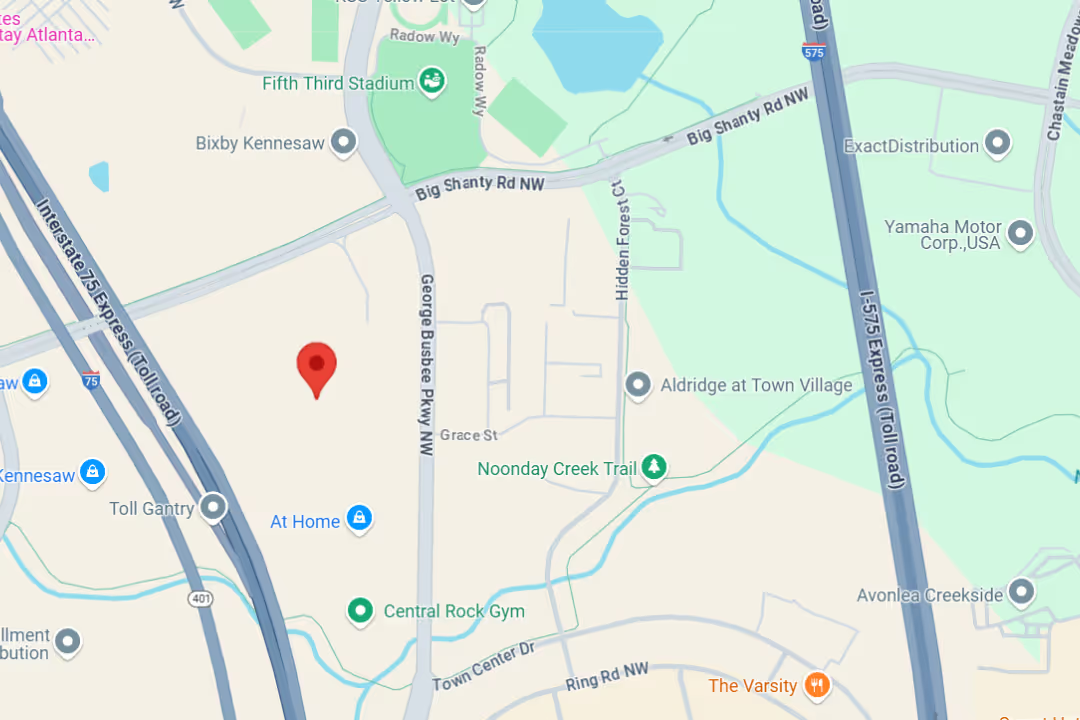
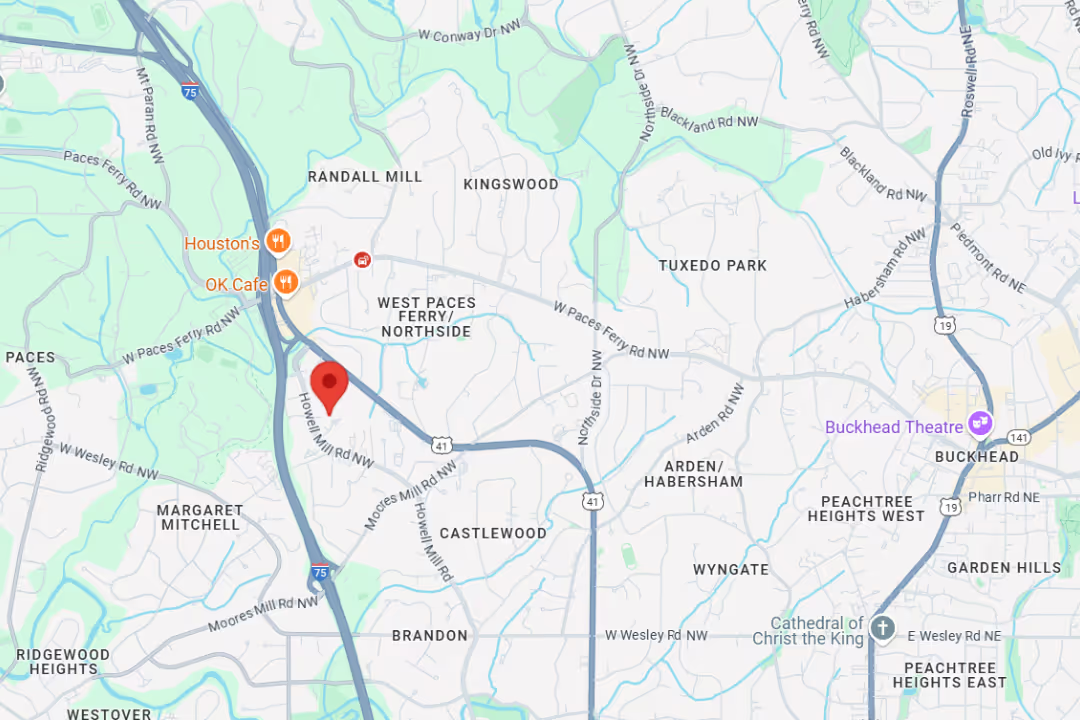
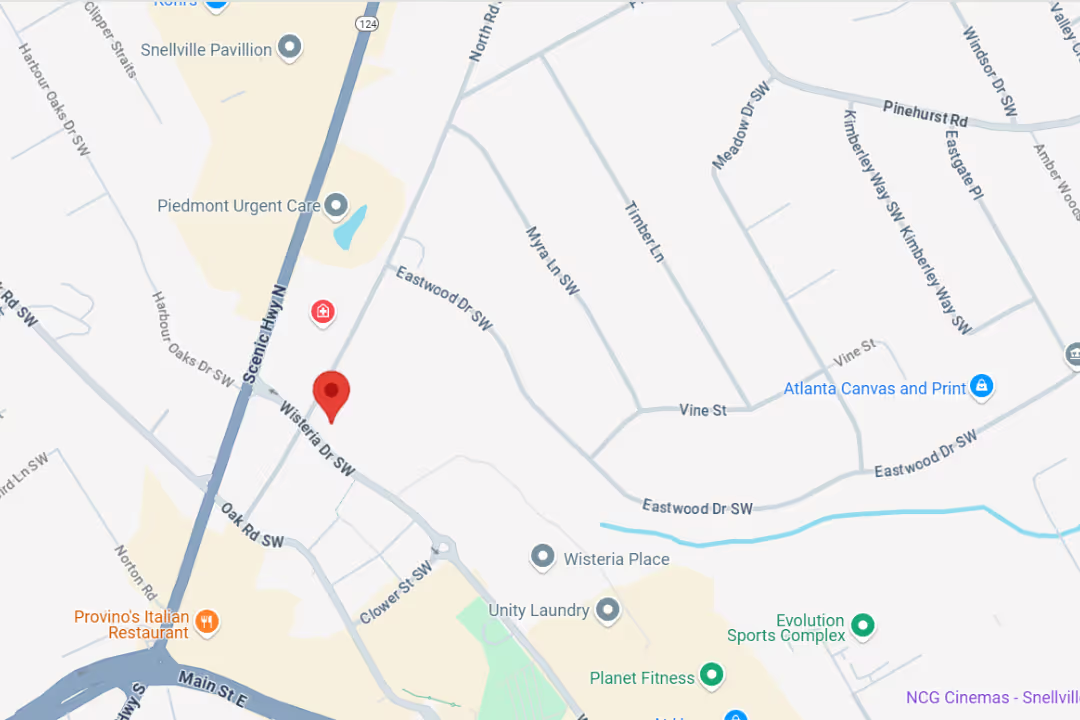
Our team delivers specialist care at convenient locations across Metro Atlanta:
Get expert tips on injury recovery, pain relief, joint health, and movement strategies—straight from our Fellowship-Trained team.