There are few things more disheartening than going through back surgery with hope for relief—only to find that the pain persists. If you’ve experienced this, you’re not alone, and you’re certainly not without options. Many patients feel frustrated, confused, or even dismissed when their symptoms continue after a technically “successful” procedure. But persistent pain after surgery doesn’t mean you’re out of solutions. In fact, it often means we simply need to target the true source of discomfort more precisely.
This ongoing pain is commonly referred to as Failed Back Surgery Syndrome (FBSS). Despite the name, FBSS doesn’t necessarily mean the surgeon did anything wrong. Rather, it means the underlying pain generator wasn’t fully resolved—or in some cases, surgery led to new issues such as scar tissue, nerve irritation, or changes in spinal biomechanics.
One of the most encouraging advancements for people with persistent pain after back surgery is Spinal Cord Stimulation (SCS)—a minimally invasive, non-opioid treatment that has helped thousands reclaim functionality and quality of life. And for many patients with FBSS, it has become one of the most successful next-step solutions.
A spinal cord stimulator (SCS) is a small, implantable device designed to help manage chronic back or leg pain by changing the way the body experiences discomfort. Unlike medications that circulate through your entire system—or additional surgeries that may not address the root cause—an SCS works directly with your nervous system to reduce pain at its source.
Think of it as a “traffic controller” for pain signals. Normally, injured or irritated nerves send pain messages up through the spinal cord to the brain. An SCS gently interrupts those signals before they reach the brain, reducing the intensity of what you actually feel.
Modern stimulators offer advanced features, including:
One of the biggest advantages of an SCS is that it's far less invasive than another spine surgery. The trial phase, where leads are placed temporarily, allows you to “test drive” the therapy before committing to a permanent implant. Many patients see significant improvement within days.
Because spinal stimulation directly modulates nerve activity, it also helps patients:
Especially if it continues despite a prior surgery or conservative care.
If you’ve tried several treatments and still feel stuck, SCS offers a different mechanism—and often, better results.
Many FBSS patients find that medication no longer provides meaningful relief. Spinal stimulation offers a non-opioid, minimally invasive option to help regain control.
While SCS can be incredibly effective, it may not be advised if:
Research shows that 50–70% of patients experience significant, long-term pain reduction with a spinal cord stimulator. But it’s important to understand success as more than a number on a pain scale.
Most patients experience a 50% or greater decrease in pain intensity, often within days of their trial.
Reduced pain means patients can walk farther, sit longer, sleep better, and return to activities they once avoided.
Many people report improved mood, better productivity, and a renewed sense of independence—benefits that ripple into relationships, work, and daily living.
For individuals with FBSS, spinal cord stimulation often outperforms repeat surgery.
Studies show that FBSS patients who undergo SCS are more likely to:
A large percentage achieve 50%–70% pain reduction, and many maintain benefits for years.
Patients often report improved mobility, greater activity tolerance, and enhanced daily functioning.
Because SCS changes how the nervous system processes pain, many people are able to significantly cut down on medication—and in some cases, eliminate opioids entirely.
Before a permanent implant, patients undergo a trial procedure, where temporary leads are placed and connected to an external stimulator. You get to live your life for several days—with the device working—so you can see how much relief it truly provides.
A successful trial typically means:
Spinal cord stimulation has evolved dramatically over the past decade. Today’s systems are more effective, more customizable, and often more comfortable.
Rechargeable systems often last longer and offer more programming flexibility.
Non-rechargeable systems are lower-maintenance and ideal for patients who prefer simplicity.
Newer devices deliver more consistent pain relief, fewer side effects, and expanded options for patients with complex pain—especially those suffering from FBSS.
Before recommending SCS, we begin with a comprehensive assessment, including:
We assess your movement, pain patterns, nerve function, and overall mobility.
Imaging and nerve studies help us pinpoint the exact source of pain—critical for predicting success.
Understanding what was done, why, and how your body responded helps us create a tailored plan.
During the trial, thin leads are placed through a needle (no large incisions), and an external battery powers the system.
Most people describe a sense of relief almost immediately, and the process is far easier than they expected.
You can walk, work, sleep, and go about life with the trial system—allowing us to measure true effectiveness before moving forward.
If the trial is successful, the permanent stimulator is implanted through a small incision as an outpatient surgery.
Most people return to light activity within days and full activity in several weeks.
The device can be adjusted over time to match your activity level and pain patterns—ensuring ongoing relief as your body heals and changes.
Persistent pain after back surgery can feel overwhelming—especially when you’ve already invested time, hope, and energy into recovering. But the truth is this: your journey isn’t over, and relief is still possible. Failed Back Surgery Syndrome doesn’t define your future, and you are not expected to simply “live with it.”
Spinal cord stimulation offers a proven, modern, and minimally invasive path forward. It works differently than traditional treatments by directly targeting the way your nerves communicate pain—allowing many patients to reclaim movement, sleep, and the ability to enjoy their lives again. For countless individuals, SCS has been the turning point they desperately needed.
At Medici Orthopaedics & Spine, we believe every patient deserves solutions that are safe, effective, and tailored to their unique experience. Our team is committed to helping you feel heard, understood, and supported as we explore the least-invasive, least drug-dependent options available today. You don’t have to settle for chronic pain. There is real hope—and we’re here to walk each step with you.
At Medici, you’re more than your MRI.
We take time to hear your story, understand your pain, and create a plan that actually works for you.
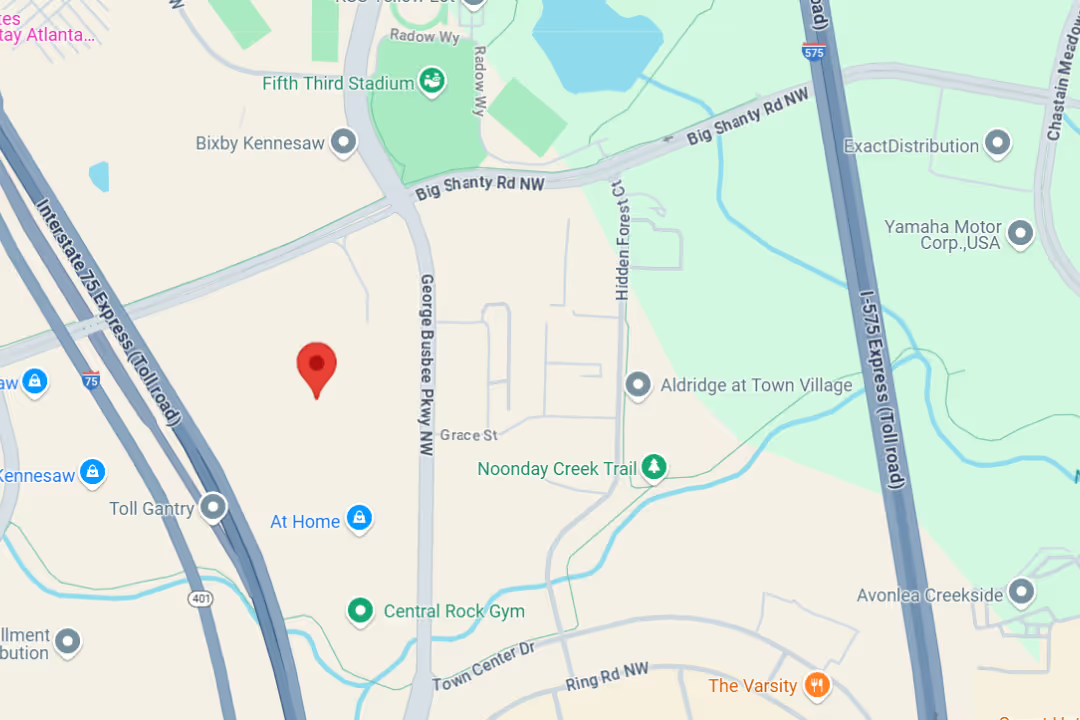
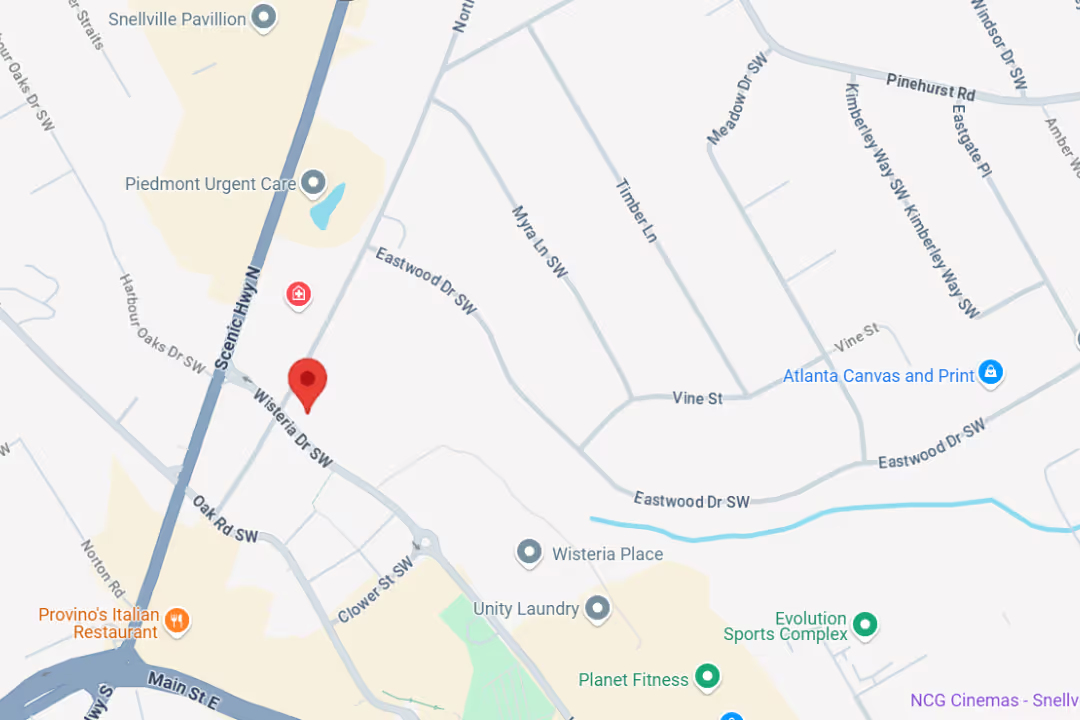
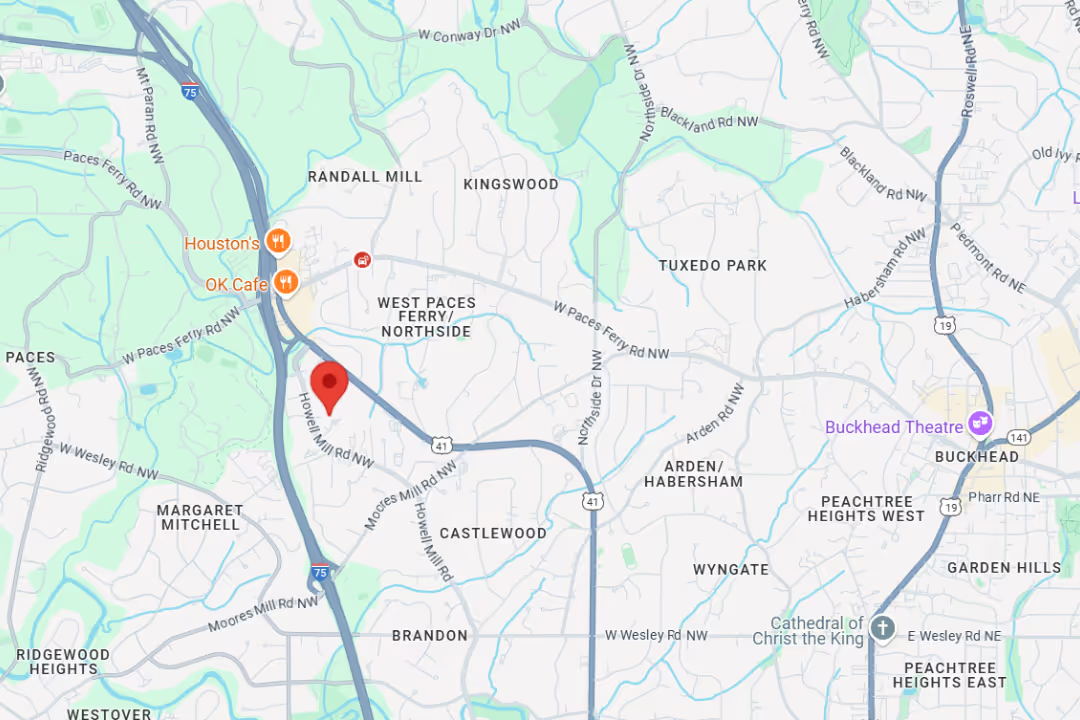
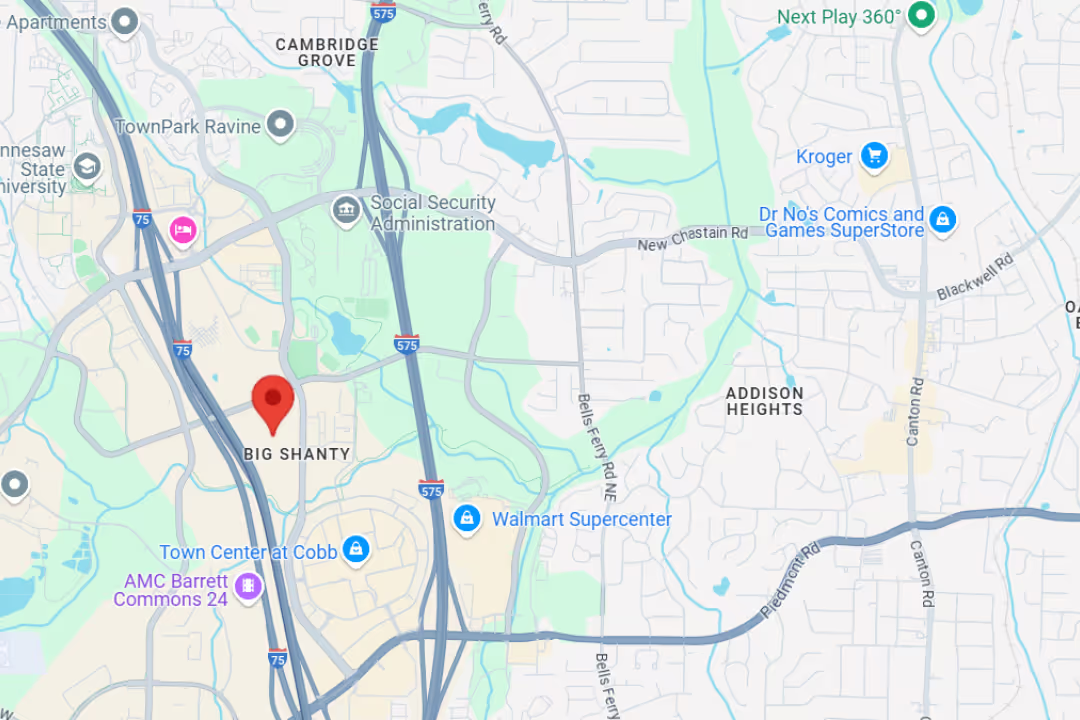
Our team delivers specialist care at convenient locations across Metro Atlanta:
Get expert tips on injury recovery, pain relief, joint health, and movement strategies—straight from our Fellowship-Trained team.