Joint pain has a way of turning normal Georgia days into a constant negotiation. You wake up stiff and try to “walk it off,” but the ache follows you into the kitchen, into the car, and into your workday. Driving becomes a game of finding the least painful position. Stairs feel steeper than they should. Exercise—something you want to do for your health—starts to feel like a risk instead of a release. Even everyday chores like carrying groceries, unloading the dishwasher, or doing laundry can spark that familiar thought: Is this going to flare me up again?
At Medici Orthopaedics & Spine, our focus is on finding the true pain generator and building a step-by-step plan that fits your life—prioritizing options that are effective, minimally invasive, and designed to reduce dependence on medications whenever possible.
One of the most talked-about options is prolotherapy. In simple terms, prolotherapy is an injection technique commonly using a dextrose-based solution that is placed in targeted areas (often around irritated tendons, ligaments, or joint support structures). The goal is to encourage a localized healing response over time, especially when pain may be tied to chronically irritated or weakened connective tissue.
If joint pain is interfering with your work, sleep, or ability to enjoy life in Georgia, Medici can help you sort out what’s causing it and whether options like prolotherapy belong in your plan.
Prolotherapy is an injection therapy designed to help with certain types of chronic joint and connective tissue pain. In many protocols, it uses a dextrose-based solution that’s injected into painful or weakened connective tissue—most often around ligaments, tendons, or specific joint structures.
Rather than acting like a temporary “numbing shot,” prolotherapy is intended to encourage a healing response in tissues that may have become irritated, strained, or less supportive over time. People often explore it when their pain feels like it’s coming from “support structures” that never fully bounced back after an injury, repetitive stress, or years of wear and tear.
It helps to separate these treatments by their main intent:
Prolotherapy is performed in targeted locations, which is why evaluation matters. Common targets include:
The key is precision—placing injections where the exam and diagnosis suggest the tissue is contributing to the pain generator.
Prolotherapy is most often discussed for pain patterns that suggest the issue isn’t only the joint surface itself, but the connective tissue that supports the joint.
This can include:
The underlying concept is simple: if a joint’s support system isn’t doing its job well, the joint can take extra strain—and the nervous system can stay on high alert. By improving the health and function of these support structures (when they’re truly the driver), some patients experience fewer flare-ups and more stable, confident movement.
Joints don’t function in isolation. They rely on a network of connective tissues:
After injury, repetitive stress, or long periods of altered movement (compensating for pain), these tissues can become irritated or less effective. When support tissues are “loose,” painful, or overloaded, the joint may experience more stress with everyday activity—walking, stairs, standing, reaching—leading to persistent pain and sensitivity.
Prolotherapy is thought to work by creating a localized inflammatory response at the injection site. That sounds counterintuitive—until you remember that controlled inflammation is part of how the body initiates repair.
In theory, the injected solution signals the body to:
Because tissue remodeling takes time, prolotherapy is often performed as a series rather than a one-and-done treatment. The spacing allows the body to respond between sessions and can be adjusted based on how you’re improving.
Most people don’t walk out feeling “instantly fixed”—and that’s normal.
Common experiences after prolotherapy include:
Your clinician will usually give guidance on a recovery window and activity modifications. In general, the goal is to protect the area briefly while still staying appropriately mobile, then layer in strengthening and movement work so the tissue gains translate into better function.
Prolotherapy is typically considered when:
Examples of scenarios where it may be discussed (depending on diagnosis and exam) include:
The “selected cases” part matters: prolotherapy is most helpful when it matches the driver of pain, not just the location of pain.
A responsible plan also includes knowing when not to use a tool.
Prolotherapy may not be appropriate when:
A good outcome is usually measured in function, not perfection. For the right patient, prolotherapy may support:
It’s also important to set expectations: prolotherapy tends to be gradual. Many patients notice progress over weeks to months, especially when treatment is paired with a plan that restores strength, mobility, and movement confidence.
You don’t have to accept joint pain as “just aging,” and you don’t have to live on temporary fixes that only get you through the week. If pain is limiting your ability to work, sleep, exercise, or enjoy time with the people you love, it’s a sign your body deserves a closer look—not just another round of pushing through.
At Medici Orthopaedics & Spine, we take a modern, patient-centered approach focused on identifying the real pain generator and building a plan that’s effective, least invasive, and as least drug-dependent as possible. For the right candidate, prolotherapy may be one option to support tissue healing and improve stability and function—especially when symptoms are tied to tendon/ligament irritation or subtle instability patterns rather than a single short-term flare.
If you’re ready for answers, schedule an evaluation with the Medici team to determine whether your joint pain is coming from joint degeneration, tendon or ligament irritation, instability patterns, or another source—and then choose the stepwise plan that best fits your goals.
Clinics
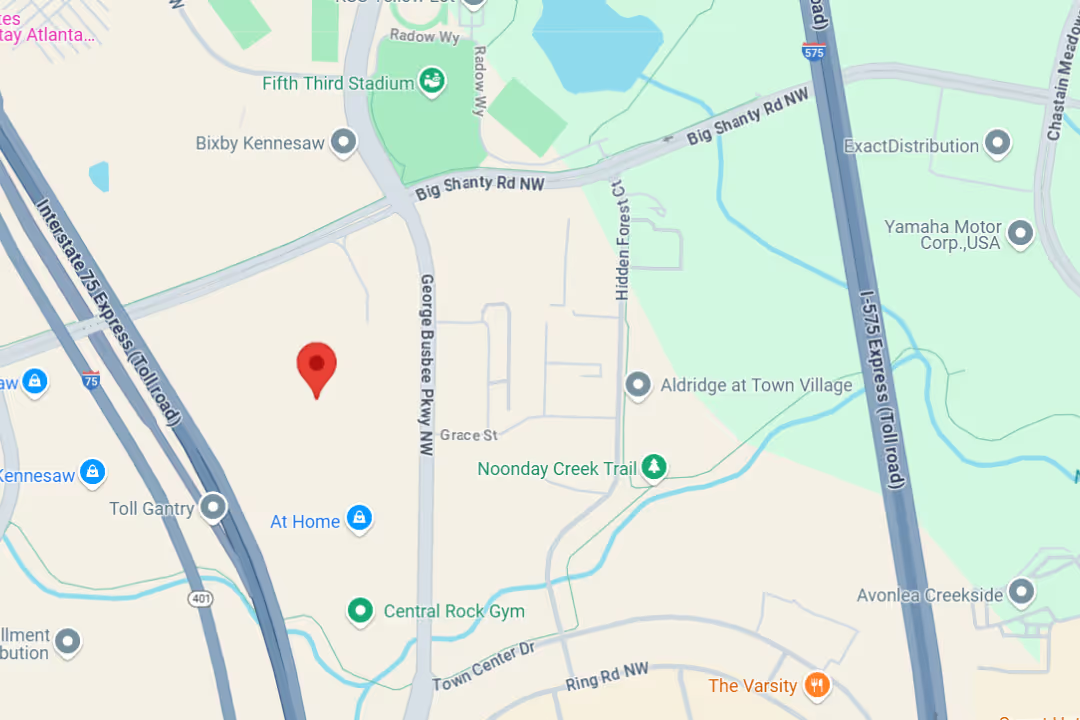
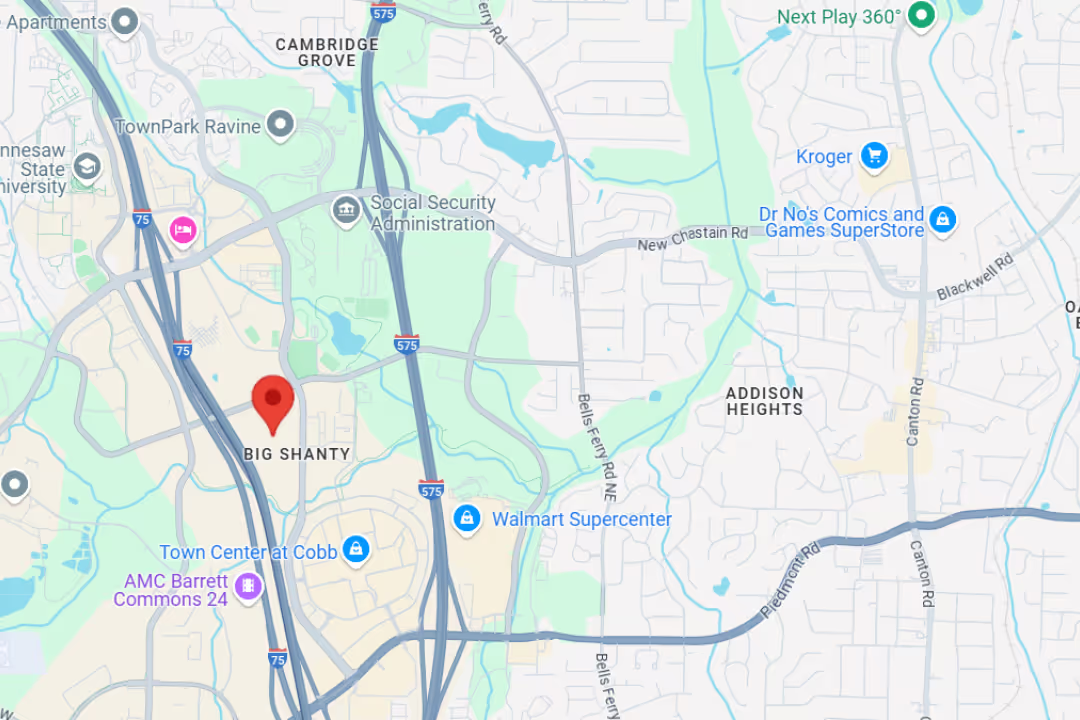
Kennesaw
2911 George Busbee Parkway, Suite 50
Kennesaw, GA 30144
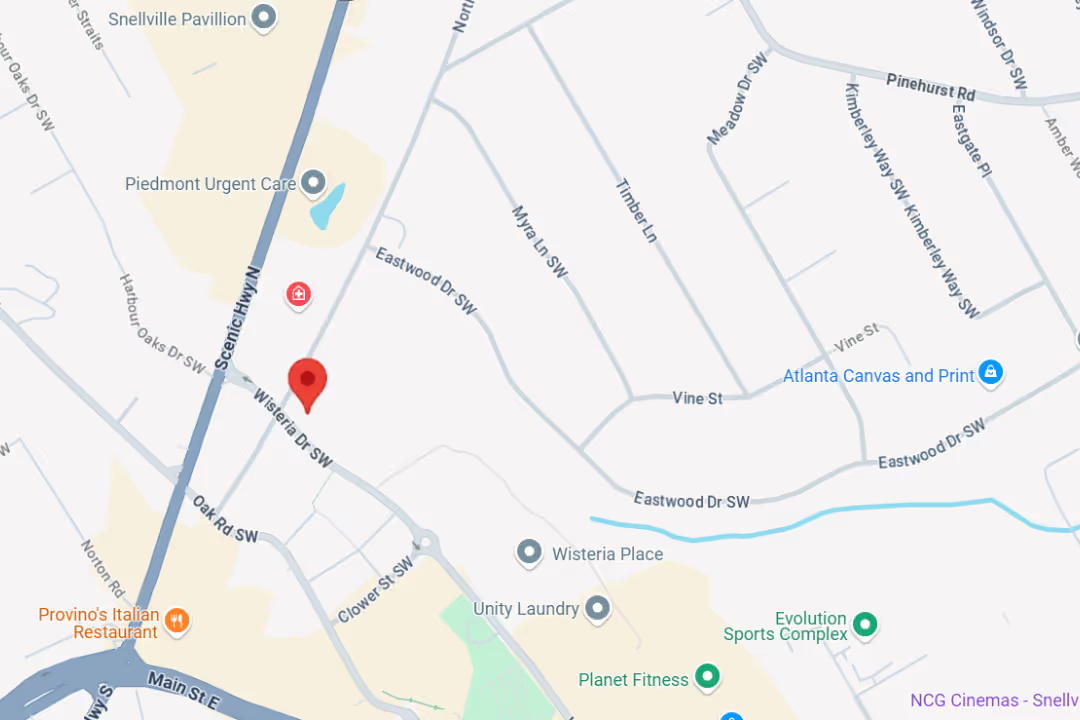
Snellville
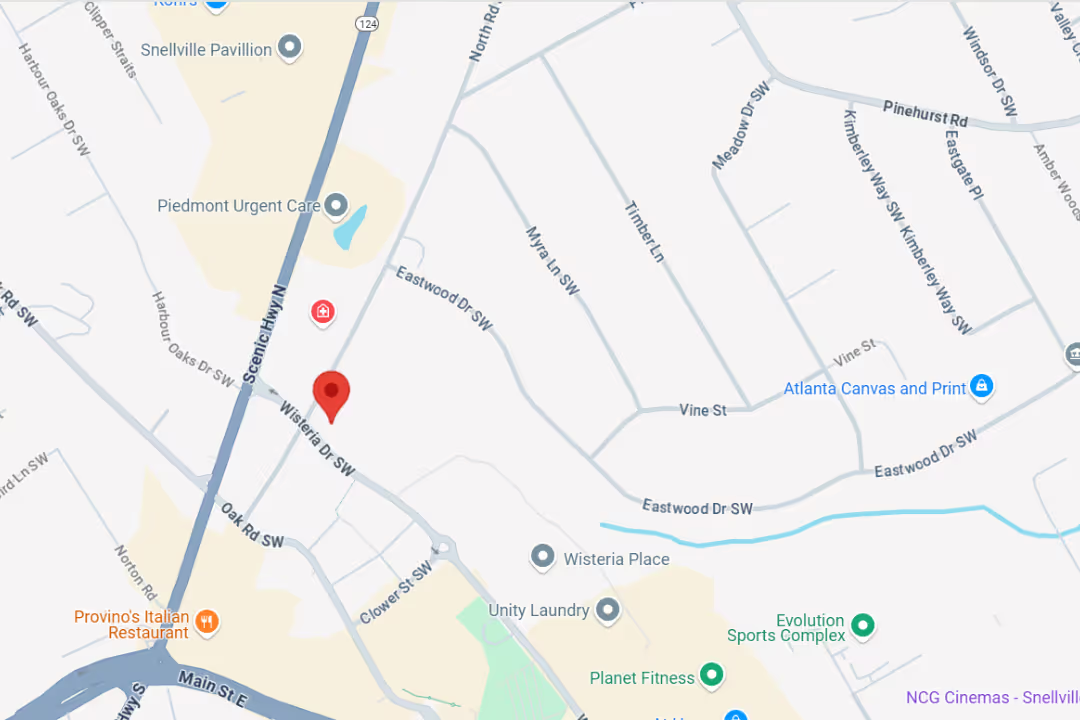
2220 Wisteria Drive, Unit 101
Snellville, GA 30078
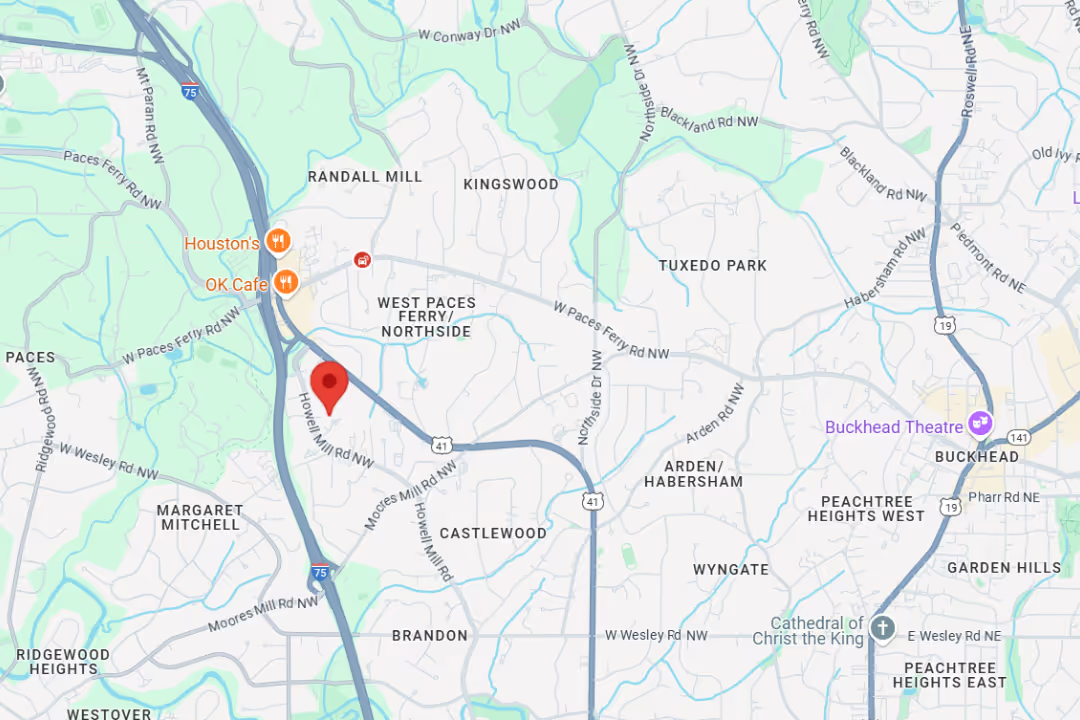
Buckhead PM&R
3200 Downwood Circle, NW, Suite 520
Atlanta, GA 30327
At Medici, you’re more than your MRI.
We take time to hear your story, understand your pain, and create a plan that actually works for you.

Our team delivers specialist care at convenient locations across Metro Atlanta:
Get expert tips on injury recovery, pain relief, joint health, and movement strategies—straight from our Fellowship-Trained team.