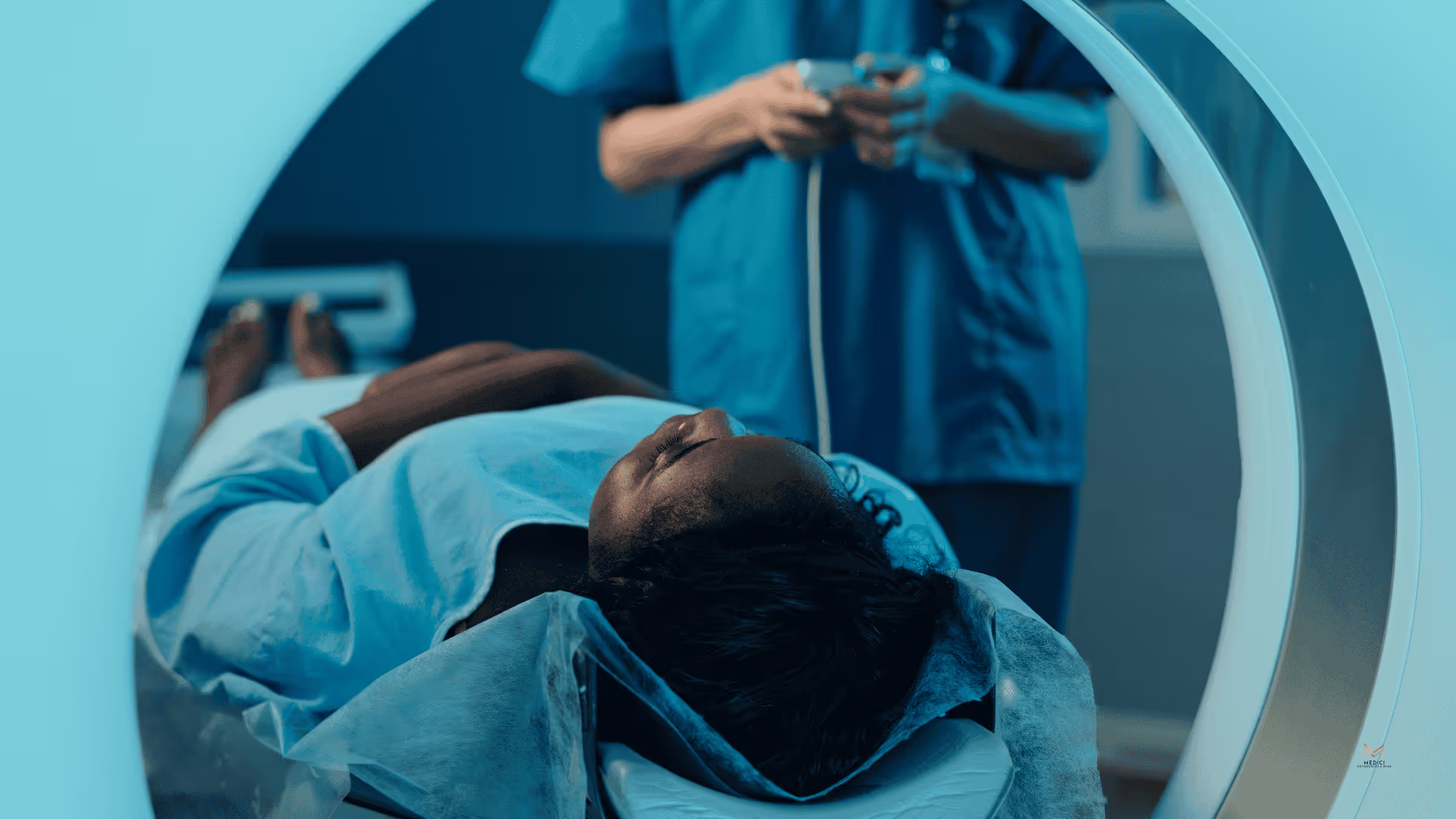
You finally get the MRI results back… and you’re told, “Everything looks normal.”
But here’s the problem—you’re still in pain.
This is one of the most frustrating experiences patients face. You’ve done everything right. You sought help, underwent imaging, and expected answers. Instead, you’re left with lingering discomfort and no clear explanation. It can feel dismissive, confusing, and even isolating.
At Medici Orthopedics & Spine, we hear this story every day. Patients come in feeling discouraged after being told nothing is wrong—yet their pain continues to interfere with work, sleep, and daily life. The reality is, there can be a significant disconnect between what imaging shows and what your body is actually experiencing.
Pain is not always visible on a scan. And more importantly—your pain is real, even if it doesn’t show up on an MRI.
Magnetic Resonance Imaging (MRI) is one of the most advanced diagnostic tools available in modern medicine. It uses powerful magnets and radio waves to create detailed images of the body’s internal structures.
Unlike X-rays or CT scans, MRIs are especially effective at capturing soft tissues. This includes spinal discs, ligaments, muscles, and nerves—making it a valuable tool for identifying herniated discs, tears, or inflammation.
MRIs are excellent at identifying structural problems such as bulging discs, spinal stenosis, or ligament damage. These findings can help guide treatment when there is a clear anatomical cause of pain.
While MRIs are powerful, they are not the full picture.
MRIs provide a static image—a snapshot in time. What they don’t show is how your body moves, compensates, or functions during daily activities. Many pain conditions are rooted in movement dysfunction, which simply doesn’t appear on imaging.
It’s entirely possible to experience significant pain without any obvious structural abnormality. Muscle imbalances, nerve irritation, and subtle instabilities often go undetected on standard imaging.
MRI results are also subject to interpretation. What one specialist considers “normal,” another may view differently depending on clinical context and experience.
Here’s something many patients find surprising: studies have shown that many people with abnormal MRI findings have no pain at all. Conversely, individuals with completely “normal” scans can experience severe discomfort.
Even with advanced imaging, many of the most common sources of pain remain hidden. These underlying issues don’t always involve obvious structural damage—but they can significantly impact how your body feels and functions every day.
Muscles are meant to work in harmony, but when certain muscles become tight, weak, or overworked, that balance is disrupted. This can lead to ongoing discomfort that doesn’t appear on imaging.
When some muscles compensate for others, they can become overstrained. Meanwhile, weaker muscles fail to provide proper support, creating a cycle of tension and fatigue.
Trigger points—small, sensitive knots within muscle tissue—can cause pain not only where they exist but also in other areas of the body. This “referred pain” often confuses patients because the source and symptom locations don’t match.
Poor posture and repetitive movements—whether from desk work, driving, or athletics—can gradually overload certain muscle groups, leading to chronic pain without any visible structural injury.
Sometimes, the issue isn’t compression or damage you can see—it’s how the nerves themselves are functioning.
In chronic conditions, the nervous system can become hypersensitive. This means even mild stimuli can trigger significant pain, long after the original injury has healed.
Nerves can become irritated or inflamed without being visibly compressed on an MRI. This irritation can still produce sharp, burning, or radiating pain.
Low-grade, ongoing inflammation can alter how nerves communicate with the brain, amplifying pain signals and making discomfort persist.
Joints may appear normal on imaging but still not function properly.
Small joints along the spine, known as facet joints, can become inflamed or irritated—causing localized or radiating pain that often goes undetected on standard imaging.
The SI joint, which connects the spine to the pelvis, is a frequent but overlooked source of lower back and hip pain. Subtle instability here is rarely visible on MRI.
Restricted or misaligned joint movement can lead to pain during activity, even when the joint structure appears normal at rest.
Not all injuries are large enough to be seen clearly on imaging—but that doesn’t make them insignificant.
Tiny ligament injuries or slight looseness (laxity) can compromise joint stability and lead to persistent discomfort.
When ligaments don’t provide proper support, surrounding muscles must compensate—often resulting in fatigue, strain, and ongoing pain.
How your body moves day-to-day plays a major role in pain development.
If one area of the body isn’t functioning properly, others compensate. Over time, these altered movement patterns can create new sources of pain.
Simple habits—like how you sit at your desk or lift objects—can place repeated stress on the body, contributing to pain that imaging won’t detect.
Pain isn’t purely physical—it’s deeply connected to your mental and emotional state.
Stress and emotional strain can influence how your body processes pain, often intensifying symptoms.
Chronic stress can cause muscles to remain in a constant state of tension, particularly in the neck, shoulders, and back.
Living with ongoing pain can affect mood, sleep, and overall well-being—creating a cycle where emotional stress and physical pain reinforce each other.
For many patients, the journey through pain management can feel like a cycle of temporary fixes without real answers. While conventional approaches have their place, they often fall short when it comes to identifying and treating the true source of pain—especially when imaging appears “normal.”
Modern medicine heavily depends on imaging like MRI to guide diagnosis. While these tools are valuable, they don’t always tell the full story. When providers rely too heavily on what shows up on a scan, they may overlook functional issues, muscle imbalances, or nerve sensitivities that don’t appear on imaging—but are very real contributors to pain.
Medications can provide short-term relief, but they often act as a temporary solution rather than a long-term answer. Pain relievers, muscle relaxants, and even stronger medications may dull symptoms without addressing the underlying cause—allowing the root issue to persist or even worsen over time.
No two patients experience pain the same way. Unfortunately, many traditional care models rely on generalized treatment plans that don’t fully account for individual differences in movement, lifestyle, and physiology. Without a personalized approach, treatments may miss the mark entirely.
Patients are often shuffled between multiple providers—each focusing on a different piece of the puzzle. This fragmented approach can lead to miscommunication, inconsistent care, and delayed progress. True healing requires a coordinated, comprehensive strategy where all aspects of a patient’s condition are considered together.
Being told that your MRI is “clear” can feel like the end of the road—but for many patients, it’s just the beginning of unanswered questions. The truth is, pain without obvious imaging findings is far more common than most people realize. And more importantly, it is valid.
That’s why it’s so important to look beyond the MRI and consider the full picture. A comprehensive, patient-centered approach can uncover hidden triggers, provide clarity, and open the door to real solutions.
If you’ve been told “your MRI looks fine” but you’re still living with daily pain, you’re not alone—and you’re not out of options. At Medici Orthopedics & Spine, we specialize in uncovering the hidden causes of pain and delivering personalized, minimally invasive treatments designed to restore your quality of life.
📞 Call us today: +1-844-328-4624
🌐 Visit us online: https://www.mediciortho.com/
Locations:
Marietta Surgery Center
792 Church Street, Unit 101
Marietta, GA 30060
(470) 795-8398
Snellville Surgery Center
2220 Wisteria Dr, Unit 100
Snellville, GA 30078
(470) 795-8398
Kennesaw Clinic
2911 George Busbee Parkway, Suite 50
Kennesaw, GA 30144
(770) 545-6404
Snellville Clinic
2220 Wisteria Drive, Unit 101
Snellville, GA 30078
(470) 645-9297
Buckhead PM&R
3200 Downwood Circle NW, Suite 520
Atlanta, GA 30327
(770) 872-7549
At Medici, you’re more than your MRI.
We take time to hear your story, understand your pain, and create a plan that actually works for you.

Our team delivers specialist care at convenient locations across Metro Atlanta:
Get expert tips on injury recovery, pain relief, joint health, and movement strategies—straight from our Fellowship-Trained team.