Joint Pain in Older Adults: The Best At-Home Exercises for Relief

For many older adults, joint pain becomes a daily companion—showing up during simple moments like walking to the mailbox, climbing stairs, bending to garden, or lifting a grandchild. What used to feel effortless now demands caution. Stiffness in the morning, aching knees after a day on your feet, or sore hips when getting out of a chair can slowly chip away at confidence and independence.

And with that discomfort often comes something else: hesitation to move.
It’s understandable—when your joints hurt, exercise can feel intimidating or even unsafe. But here’s the encouraging truth: the right kind of motion is one of the most powerful tools we have for relieving joint pain.

That’s why today’s focus is simple, safe at-home exercises older adults can perform with confidence. These movements are designed to reduce pain—not trigger it—and can be done without equipment or complicated routines.

At Medici Orthopaedics & Spine, we believe in a least invasive, most effective, movement-first approach to managing joint pain. When your body is given the right tools—strength, flexibility, balance—it often responds with less pain and more freedom.

Safety First — How to Exercise Without Causing Harm

Warm-Up Essentials

A gentle warm-up tells your joints and muscles, “We’re about to move—let’s get ready.”
Just 2–4 minutes can make a big difference in comfort and mobility.

Try these simple warm-up movements:

  • Gentle Marching in Place: Lift your knees softly, one at a time, to increase circulation.
  • Shoulder Rolls: Up, back, and down to release tension in the upper body.
  • Ankle Mobility: Slowly circle each ankle to loosen stiff joints and improve balance.

Pain vs. Discomfort — Understanding the Difference

Not all sensations are harmful, and knowing the difference helps you stay confident:

  • Normal discomfort: Mild stretching, slight muscle fatigue, or gentle warmth
  • Not normal: Sharp pain, joint locking, sudden swelling, or electric-like sensations

When to Modify or Avoid Exercises

You may need to adjust exercises if:

  • You have balance challenges
  • You’re experiencing an arthritis flare-up
  • There is noticeable swelling or heat in a joint
  • A movement feels unstable or unsafe

The Role of Assistive Devices

Assistive tools can make exercise safer and more accessible—especially for seniors. These are not signs of weakness; they’re smart stability enhancers.

Helpful devices include:

  • Chairs for seated or supported exercises
  • Walls or countertops for balance
  • Rails or handles for assistance during standing movements
  • Light resistance bands to build strength without strain

Best At-Home Exercises for Joint Pain Relief (With Step-by-Step Guidance)

For Knee Pain

Seated Leg Raises

Strong quadriceps reduce stress on the knee joint during walking and standing.

  1. Sit tall in a sturdy chair.
  2. Straighten one leg until it’s parallel to the floor.
  3. Hold for 2–3 seconds.
  4. Lower with control.
  5. Perform 8–12 repetitions per leg.

Modified Wall Sits

This strengthens the muscles surrounding the knees without overloading the joint.

  1. Stand with your back against a wall.
  2. Slide down just a few inches—avoid deep bending.
  3. Hold for 5–10 seconds.
  4. Slide back up.
  5. Repeat 5–8 times.

Hamstring Stretches

Flexible hamstrings reduce knee strain and improve overall mobility.

  1. Sit at the edge of a chair.
  2. Extend one leg straight with heel on the ground.
  3. Lean forward slightly until you feel a stretch.
  4. Hold for 15–20 seconds.
  5. Repeat on the other side.

For Hip Pain

Hip Marching

Strengthens key muscles used for walking, climbing stairs, and standing.

  1. Sit upright in a chair.
  2. Lift one knee toward your chest.
  3. Lower and repeat with the other knee.
  4. Perform 10–20 repetitions per side.

Side-Lying Leg Lifts

This stabilizes the pelvis and improves gait mechanics.

  1. Lie on your side with legs straight.
  2. Slowly lift the top leg 8–10 inches.
  3. Lower with control.
  4. Perform 8–12 repetitions per side.

Figure-4 Stretch

Relieves hip and glute tension that often contributes to lower back pain.

  1. Sit on a chair.
  2. Cross one ankle over the opposite knee.
  3. Lean forward gently.
  4. Hold 15–20 seconds.
  5. Switch sides.

For Lower Back Pain

Pelvic Tilts

Activates deep core muscles and reduces lumbar stiffness.

  1. Lie on your back with knees bent.
  2. Gently tilt your pelvis forward, flattening your low back against the floor.
  3. Return to neutral.
  4. Repeat 10–15 times.

Cat-Cow Movement

Encourages healthy spinal motion and reduces tightness.

  1. Begin on hands and knees.
  2. Arch your back upward (Cat).
  3. Lower your belly and lift your chest (Cow).
  4. Move slowly between positions 10–12 times.

Knee-to-Chest Stretch

Relaxes lower back muscles and improves flexibility.

  1. Lie on your back.
  2. Bring one knee toward your chest.
  3. Hold 15–20 seconds.
  4. Switch legs.

For Shoulder Pain

Wall Slides

Encourages smooth shoulder movement and reduces stiffness.

  1. Stand with your back to a wall.
  2. Raise your arms overhead, sliding them along the wall.
  3. Lower gently.
  4. Repeat 8–12 times.

Pendulum Movements

Relaxes tight shoulder muscles without strain.

  1. Lean forward, supporting yourself on a chair.
  2. Let one arm hang loosely.
  3. Swing it gently in small circles.
  4. Perform for 20–30 seconds.

Band Rows

Strengthens postural muscles that relieve stress on the shoulders.

  1. Sit or stand with good posture.
  2. Hold a resistance band (or towel) with both hands.
  3. Pull elbows back and squeeze shoulder blades together.
  4. Repeat 10–15 times.

For Hand & Wrist Pain

Finger Flex & Extend

Keeps joints loose and reduces stiffness.

  1. Spread fingers wide.
  2. Close into a gentle fist.
  3. Repeat 10–15 times.

Grip Strengthening

Improves grip strength needed for everyday tasks.

  1. Squeeze a soft ball or rolled towel.
  2. Hold 3–5 seconds.
  3. Repeat 8–12 times.

Gentle Wrist Circles

Lubricates wrist joints and relieves tension.

  1. Extend your arm forward.
  2. Rotate wrist slowly clockwise, then counterclockwise.
  3. Do 10 circles each direction.

For Ankle & Foot Pain

Ankle Circles

  1. Sit comfortably.
  2. Lift one foot off the floor.
  3. Rotate ankle slowly.
  4. Repeat 10 circles each way.

Heel Raises

  1. Hold onto a counter for balance.
  2. Lift heels off the ground.
  3. Lower slowly.
  4. Perform 10–15 reps.

Toe Flex & Extend

Supports arch strength and reduces stiffness.

  1. Sit with feet flat.
  2. Lift toes upward, then press them down.
  3. Repeat 10–15 times.

Creating a Routine — How to Make These Exercises Actually Work

Frequency Guidelines

For most older adults, the ideal routine includes:

  • Strength exercises: 2–3 days per week
  • Stretching & mobility exercises: Daily or at least 4–5 days per week
  • Warm-ups: Before any activity

Progression

As your joints grow stronger, you can slowly increase the challenge:

  • Add 1–2 more repetitions each week
  • Hold stretches for a few extra seconds
  • Use light resistance bands once you feel confident
  • Gradually lengthen your exercise time

Combining Strength + Stretching for Maximum Relief

Strengthening the muscles around your joints reduces pressure and improves alignment. Stretching increases mobility and reduces stiffness. When combined, these two forms of movement:

  • Reduce inflammation
  • Enhance balance
  • Improve everyday activities like walking, climbing stairs, and standing
  • Support long-term joint health

Importance of Consistency

Consistency is where the magic happens. When you repeat movements regularly, your body experiences neuromuscular adaptation

Over time, you’ll notice:

  • Improved strength
  • Better coordination
  • Less stiffness
  • Easier movement
  • Reduced pain

Take the First Step Toward Stronger, Happier Joints

Joint pain can feel discouraging, especially when it begins to interfere with the activities that bring joy, independence, and confidence. But movement truly is one of the most powerful tools we have—at every age.

At Medici Orthopaedics & Spine, we support this movement-first approach because it aligns with our core philosophy:
The least invasive, most effective treatments lead to the best long-term outcomes.

Whether you’re managing arthritis, stiffness, or age-related wear-and-tear, these exercises can be life-changing—and we’re here to guide you every step of the way.

If you’re ready to build a personalized plan for joint pain relief—or want guidance on which exercises are safest for you—our team is here to help. Early evaluation often prevents long-term deterioration and helps you return to strength and mobility quickly.

Contact Us Today

📞 Main Line: +1-844-328-4624
🌐 Website: https://www.mediciortho.com/

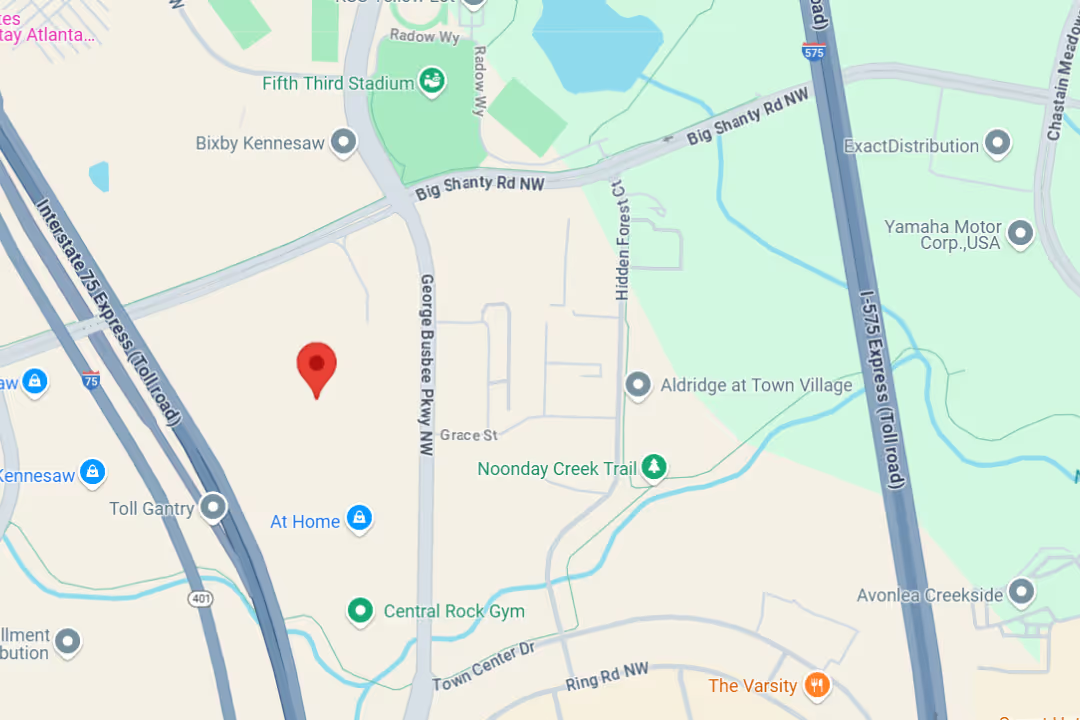
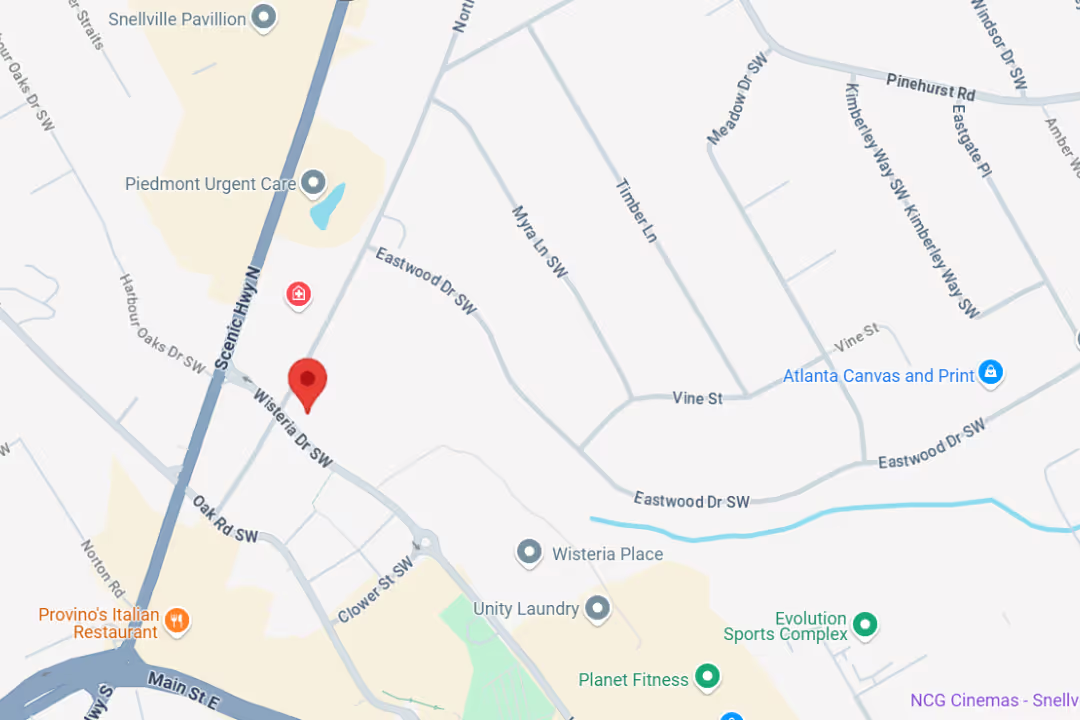
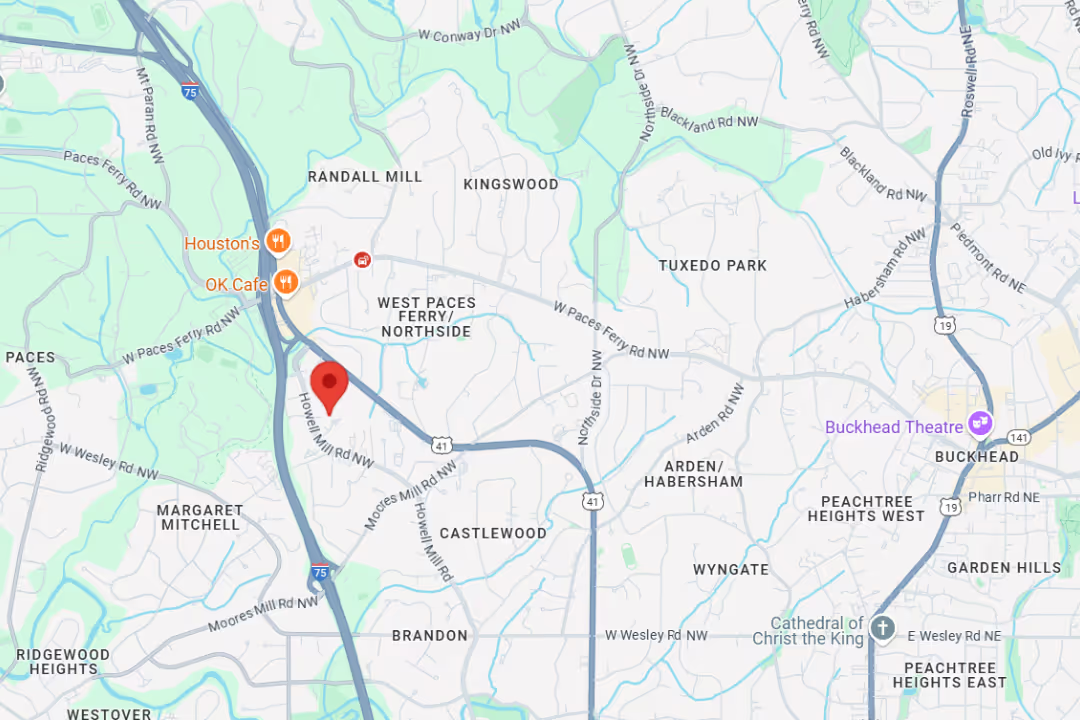
📍 Locations:

Tired of Feeling
Like Just Another
Chart?

At Medici, you’re more than your MRI.
We take time to hear your story, understand your pain, and create a plan that actually works for you.