Even a “minor” car accident can leave you feeling rattled. One moment you’re driving like normal—and the next you’re pulling over, checking for damage, replaying what happened, and trying to figure out what to do next. It’s common to feel a mix of shock, confusion, and adrenaline… and that’s exactly why many people don’t realize they’ve been injured right away.
In the hours after a collision, your body can mask symptoms. Adrenaline can dull pain, and inflammation often builds gradually. Muscles may tighten protectively later that day (or over the next couple of days), especially in the neck, shoulders, and lower back. That delayed response is why someone can walk away thinking, “I’m fine,” only to wake up the next morning stiff, sore, and suddenly unable to move comfortably.
Waiting can allow an injury to become more reactive, more stiff, and harder to calm down—especially when nerves, discs, or joints are involved. The good news is you don’t have to navigate this alone. There are local, conservative-first options to evaluate auto accident injuries and guide recovery—without pressure, and without immediately jumping to surgery or heavy medications. At Medici Orthopaedics & Spine, the focus is on clarity, safe relief, and restoring function using the least invasive plan that makes medical sense for you.
First Things First: What to Do Right After a Car Accident
Safety and Documentation Basics
Immediate safety steps:
- Move to a safe location if you can do so without risking further harm (e.g., shoulder, nearby parking lot).
- Call 911 when appropriate, especially if:
- someone is injured,
- vehicles are blocking traffic,
- airbags deployed,
- or you suspect a serious injury.
Document the scene (it helps you later—medically and practically):
- Exchange information with the other driver(s):
- name, phone, insurance, license plate
- Take photos if safe:
- vehicle damage (all sides if possible)
- license plates
- the roadway/intersection
- visible injuries (bruising, swelling) if present
- Write down key details while they’re fresh:
- time and location
- weather/road conditions
- what you remember happening
Medical Care Timeline: “When Should I Be Seen?”
In general:
- Same day is best when symptoms are intense, neurologic (numbness/weakness), or you hit your head—or if you simply feel “not right.”
- Within 24–72 hours is often appropriate for delayed-onset symptoms, including stiffness, soreness, or headaches that appear the next day or two.
Why early evaluation helps medically and functionally:
- Creates a baseline: documenting symptoms early helps track what’s improving and what isn’t.
- Prevents worsening patterns: early care can reduce protective muscle spasm, improve mobility, and lower the chance that pain becomes chronic.
- Supports faster recovery: the sooner you identify what’s injured (muscle vs. joint vs. disc vs. nerve), the sooner you can start the right plan.
What to Expect at Medici Injury Clinics
Comprehensive Clinical Evaluation
Your visit starts with connecting the dots between the accident and your symptoms.
What we evaluate:
- Detailed history
- Impact details, your position in the vehicle, bracing, seatbelt/airbag involvement
- Symptoms now vs. symptoms that appeared later
- Prior injuries or pre-existing pain that may have been aggravated
- Physical exam
- Range of motion, tenderness patterns, strength testing
- Reflexes and sensation to assess nerve involvement
- Functional movement assessment
- Walking, bending, posture
- Shoulder/hip mechanics and how you move during everyday tasks
Imaging and Diagnostic Testing When Needed
Imaging is used thoughtfully—when it will change the plan or clarify something important.
Common tests include:
- X-rays
- Evaluate alignment, fractures, and instability concerns
- MRI
- Used when symptoms suggest disc, nerve, or soft tissue injury that needs a deeper look
- Additional testing in select cases
- Nerve studies (like EMG/NCS) when symptoms are complex or neurologic findings need clarification
Non-Surgical Treatment Options for Auto Accident Injuries
Physical Therapy & Corrective Exercise
Physical therapy is often the backbone of recovery because it helps you regain movement without “pushing through” the wrong way.
Restoring mobility and strength safely
- Gentle early motion to prevent stiffness from “locking in”
- Gradual strengthening to support injured areas without flare-ups
- Re-training movement patterns after your body has been guarding or compensating
Stabilization for neck/back
- Deep neck stabilizers and posture mechanics for whiplash and cervical strain
- Core stabilization and hip mechanics to protect the lumbar spine
- Scapular (shoulder blade) control to reduce strain through the neck and upper back
Progressive return-to-activity plan
- Stepwise progression back to work demands and normal routines
- Guidance on lifting, bending, reaching, and driving mechanics
- Home exercises designed to maintain progress between visits and prevent relapse
Myofascial Release & Sports Massage Therapy
Many post-accident symptoms are amplified by muscle guarding—your body’s protective reflex after trauma. Targeted soft tissue care can be a game-changer, especially when tightness is limiting rehab progress.
Reducing muscle spasm and trigger points
- Releasing “knots” in common post-accident areas:
- upper traps, levator scapulae, scalenes (neck/shoulders)
- thoracic paraspinals (upper back)
- quadratus lumborum and glutes (low back/hip)
- Calming protective tension that can cause headaches or referred pain patterns
Improving mobility and pain tolerance
- Better range of motion so therapy exercises feel doable
- Less stiffness with turning the head, reaching, or bending
- Improved comfort that supports sleep and day-to-day function
Interventional Pain Management
When pain is severe, persistent, or radiating—especially if it’s limiting your ability to participate in therapy—interventional treatments can help reduce inflammation and “turn down” the pain enough for rehab to work.
Trigger point injections
- Useful for stubborn muscle knots that don’t respond to manual therapy alone
- Helps reset muscle guarding and improve range of motion
Epidural steroid injections for radiating pain
- Often used when nerve irritation is causing:
- arm pain/tingling (neck-driven symptoms)
- leg pain/sciatica (low-back-driven symptoms)
- Targets inflammation around irritated nerves
Joint injections for facet/SI/shoulder involvement
- Facet joint injections for joint-based neck or back pain
- SI joint injections when pelvic/SI irritation is present after impact or bracing
- Shoulder injections when the joint and surrounding structures are inflamed and limiting function
How injections reduce inflammation and help rehab progress
- Decrease inflammatory chemicals and swelling at the pain source
- Reduce pain signals so movement feels safer and more natural
- Improve tolerance for physical therapy—often the key to long-term results
Medication Management
Medication is typically used as a short-term support—not a long-term solution—so you can function, sleep, and participate in recovery without relying on high-risk approaches.
Anti-inflammatory strategies
- Used when appropriate to reduce swelling and pain sensitivity
- Helps calm flare cycles early, especially after soft tissue trauma
Short-term muscle relaxants in select cases
- Considered for acute spasm that disrupts sleep or blocks mobility
- Typically limited use to avoid unnecessary side effects or dependence
Avoiding long-term dependency and prioritizing function
- Focus on helping you move better and heal—not just “numbing symptoms”
- Medication used as a bridge while therapy and healing take effect
Regenerative Medicine
Some injuries involve tissue irritation or instability patterns that may benefit from regenerative approaches—but only when the diagnosis and candidacy make sense.
Prolotherapy and regenerative approaches for select injuries
- May be considered for specific ligament/tendon support issues contributing to ongoing pain
- Often used when symptoms persist despite solid conservative care
Used as part of a broader recovery plan
- Typically combined with corrective exercise and movement retraining
- Designed to support long-term tissue health and stability—not replace rehab
Hyperbaric Oxygen Therapy
Hyperbaric Oxygen Therapy (HBOT) may be considered in select cases as a supportive tool—especially when recovery is complicated by tissue stress, inflammation, or delayed healing patterns.
How HBOT may support healing in select cases
- Delivers high-concentration oxygen under pressure to increase oxygen availability in tissues
- May support recovery environments where oxygen demand is high and inflammation is persistent
Not a cure-all—used strategically based on candidacy
- HBOT isn’t “for every accident” or “for pain in general”
- It’s most appropriate when it fits the clinical picture and is integrated into a broader plan (PT, movement correction, targeted pain interventions when needed)
Get Checked, Get Clear Answers, Get Moving Again
After a car accident, it’s easy to tell yourself you should “tough it out”—especially if the crash seemed minor or you were able to walk away. But pain and injury don’t always show up right away, and waiting for symptoms to become severe can make recovery harder than it needs to be. You deserve a clear understanding of what’s happening in your body and a plan that helps you heal safely—without rushing into drastic measures.
If you’ve been in a car accident—whether symptoms started immediately or days later—we’re here to help you understand what’s going on and what your best next steps are. At Medici Orthopaedics & Spine, our approach is conservative-first and patient-centered: we focus on accurate diagnosis, minimally invasive care when appropriate, and getting you back to movement, sleep, work, and life with confidence.
Contact Medici Orthopaedics & Spine
Clinics
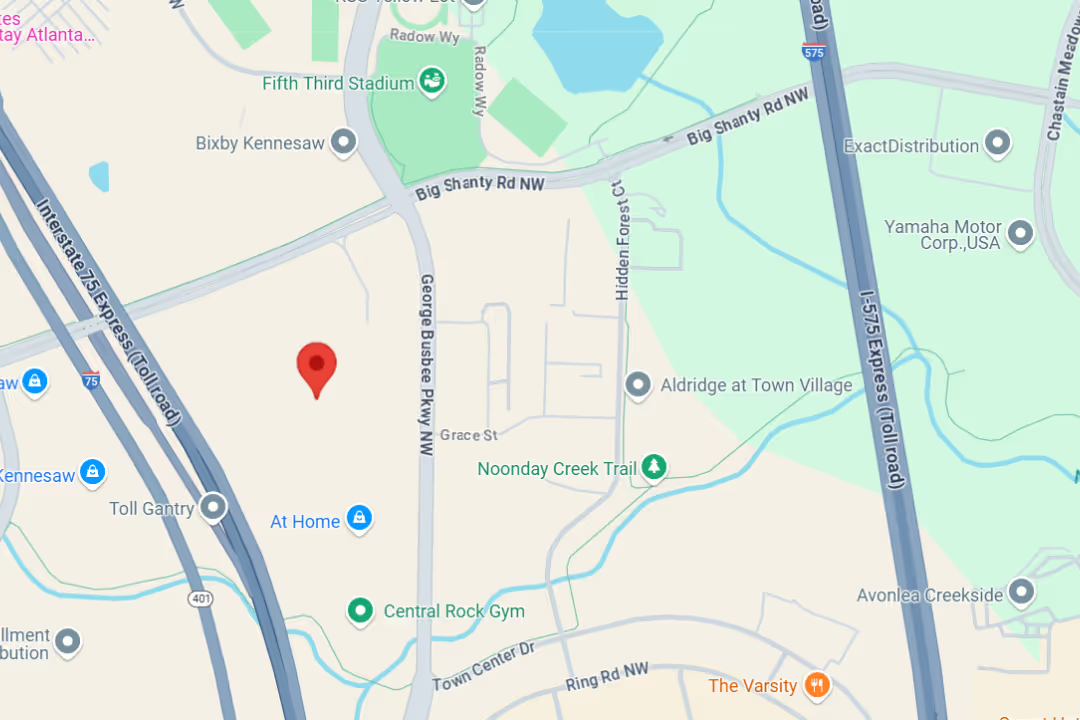
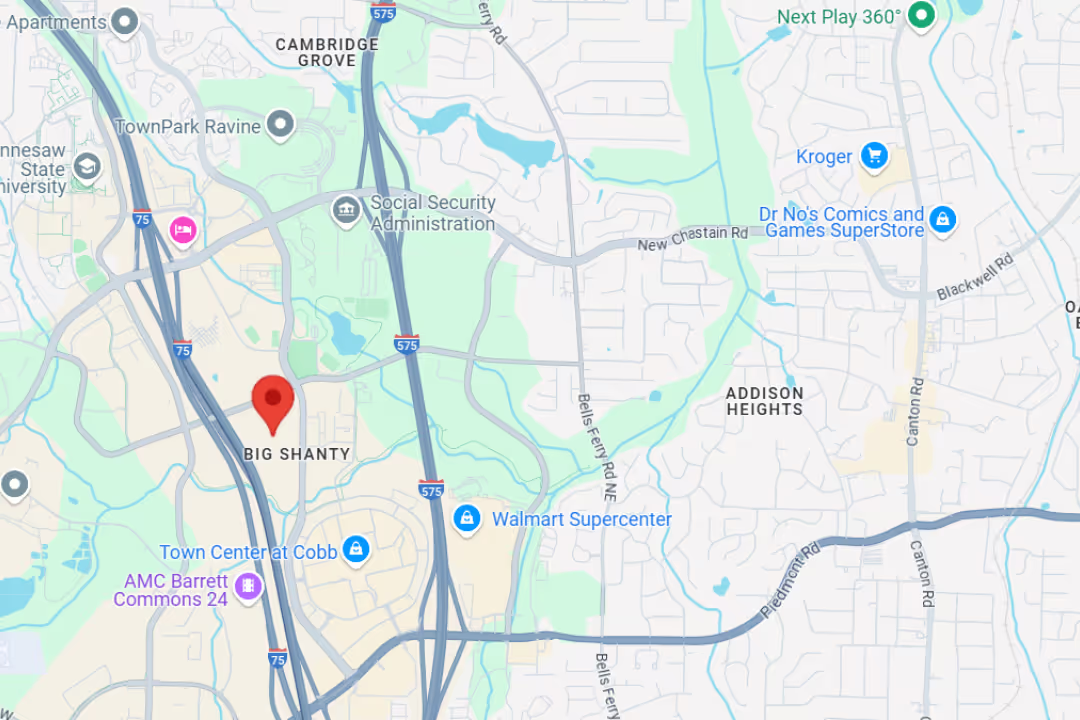
Kennesaw
2911 George Busbee Parkway, Suite 50
Kennesaw, GA 30144
(770) 545-6404
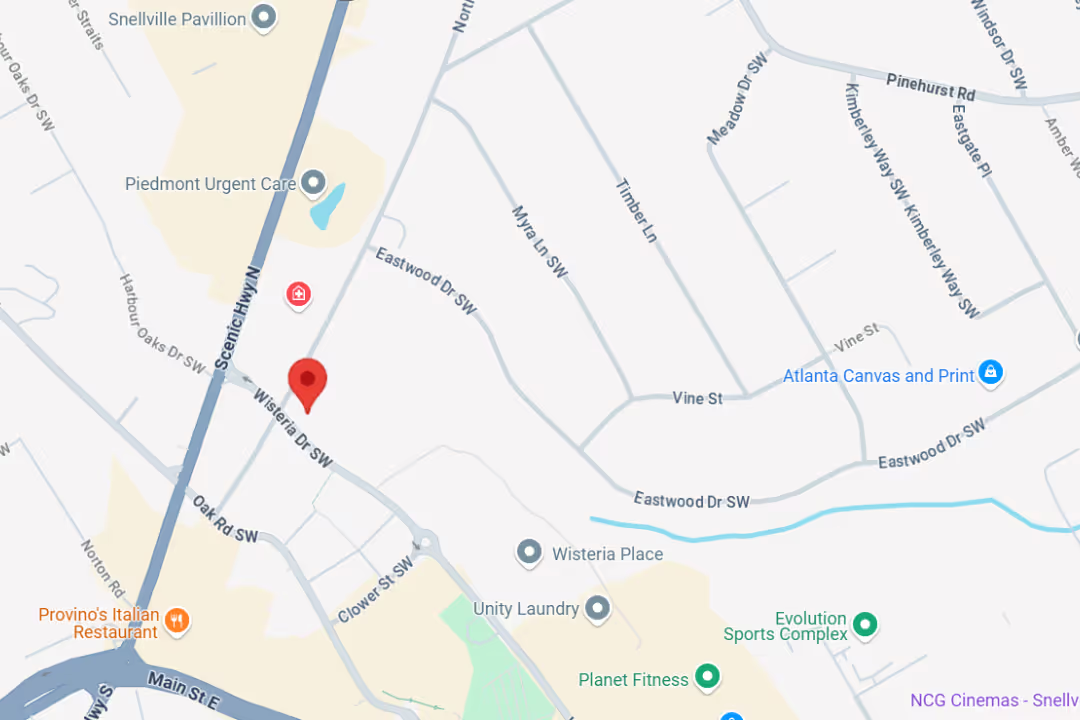
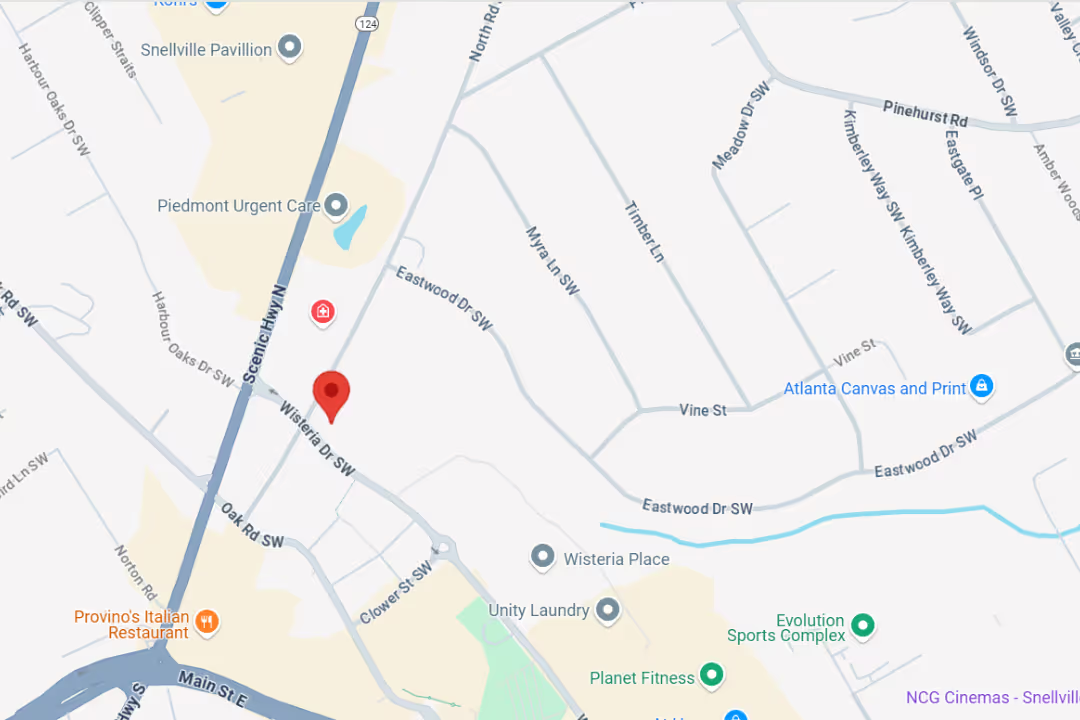
Snellville
2220 Wisteria Drive, Unit 101
Snellville, GA 30078
(470) 645-9297
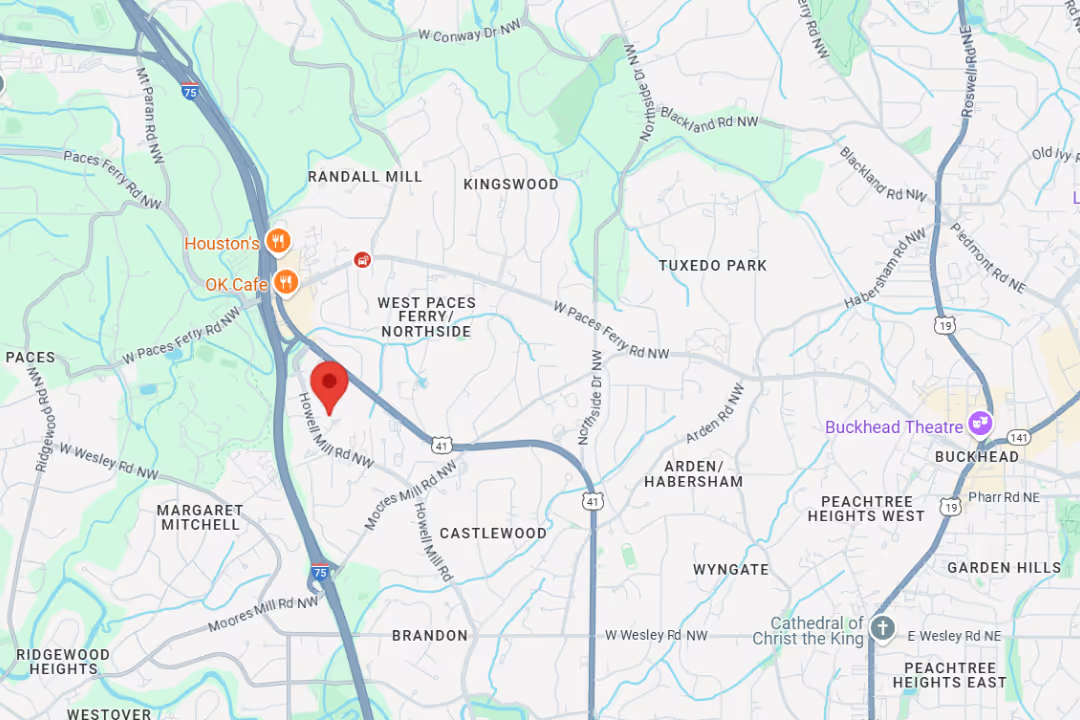
Buckhead PM&R (Atlanta)
3200 Downwood Circle, NW, Suite 520
Atlanta, GA 30327
(770) 872-7549