When pain won’t let up, it’s natural to look for options beyond medications, injections, or surgery. That’s why many people in Marietta and beyond are asking about Hyperbaric Oxygen Therapy (HBOT)—a treatment that delivers oxygen under pressure to help support the body’s healing process. It’s not a new trend; it’s a medically recognized therapy that’s been used for decades for specific conditions such as wound healing, carbon monoxide poisoning, and decompression sickness. But more recently, patients and clinicians have been exploring whether HBOT might also play a role in reducing chronic or inflammatory pain.
Oxygen is vital for healing. Every cell in your body relies on it to repair tissue, manage inflammation, and produce energy. In certain injuries or chronic conditions, tissues may not get enough oxygen due to poor circulation or swelling. HBOT works by delivering pure oxygen at higher-than-normal atmospheric pressure, allowing more oxygen to dissolve into the bloodstream and reach damaged tissues.
If you’re struggling with ongoing pain and want to explore safe, medically guided, non-surgical options, our Marietta team at Medici Orthopaedics & Spine can help you understand whether HBOT—or another approach—is the right next step. The goal isn’t just to reduce pain—it’s to restore movement, energy, and confidence in how your body feels every day.
Hyperbaric Oxygen Therapy (HBOT) is breathing high-concentration oxygen in a pressurized chamber so your blood can carry more dissolved oxygen to tissues throughout the body.
Pressure in hyperbaric medicine is often discussed as ATA (atmospheres absolute). For clinical HBOT, the Undersea & Hyperbaric Medical Society (UHMS) describes HBOT as breathing near-100% oxygen in a chamber pressurized above sea level pressure—commonly at or above 1.4 ATA (and UHMS-approved indications typically involve higher pressures, often at least 2 ATA).
Why that matters for patients:
Most patients will hear these two broad categories:
Most people describe it as similar to flying or diving in terms of ear pressure.
Common experience points:
This is a big distinction in today’s marketplace. The FDA has emphasized the importance of safe use of hyperbaric devices and following proper instructions and protocols, noting reports of serious injuries and deaths associated with HBOT device use.
Why medical supervision matters:
HBOT is widely discussed in clinical medicine as a supportive therapy in scenarios where tissue repair is central—helping the body create a better environment for recovery and rebuilding (without promising a “regrowth” miracle).
Some chronic pain conditions involve a nervous system that becomes “stuck” in an overly sensitive state (often called central sensitization). Researchers are exploring whether HBOT may influence these pathways in select cases—but this area is still developing and very diagnosis-dependent.
When patients ask, “Does HBOT work for pain?” the safest, most honest way to answer starts here: HBOT has well-established, evidence-based medical indications—and that matters for three big reasons:
The Undersea & Hyperbaric Medical Society (UHMS) maintains a widely referenced list of indications where HBOT is supported by scientific and clinical evidence.
A few examples that often overlap with pain—because the underlying condition improves—include:
Complex Regional Pain Syndrome (CRPS)
CRPS is studied because it often involves a mix of:
Some clinical studies and reviews suggest HBOT may reduce pain and swelling and improve function in certain CRPS cases, but limitations remain:
Fibromyalgia (selected patient populations)
Systematic reviews and meta-analyses have explored HBOT for fibromyalgia and suggest potential improvements in pain and function for some groups—but results can be inconsistent due to:
A lot of real-world “pain relief” from HBOT is best understood as pain improving because healing improves, not because HBOT is directly “treating pain nerves” in every case.
Examples (diagnosis-dependent) include:
A helpful way to frame it:
Living with persistent pain can make even the simplest parts of life—working, sleeping, moving—feel exhausting. But you don’t have to “push through” it forever or accept pain as your new normal. Relief starts with clarity—understanding what’s actually causing your pain and then choosing the treatment that targets the root, not just the symptoms.
At Medici Orthopaedics & Spine, we believe in a conservative-first approach: using the least invasive, most effective methods to restore comfort and function. Whether it’s Hyperbaric Oxygen Therapy (HBOT) or another evidence-based treatment, the right plan begins with an accurate diagnosis and a team that listens.
If you’re curious whether HBOT could play a role in your pain management plan—or if you simply want to know which non-surgical, drug-minimizing options make sense for you—our Marietta team will take the time to explain what HBOT can and can’t do. From there, we’ll map out a personalized plan focused on the least invasive path to better function and lasting relief.
Marietta
792 Church Street, Unit 101
Marietta, GA 30060
(470) 795-8398
Snellville
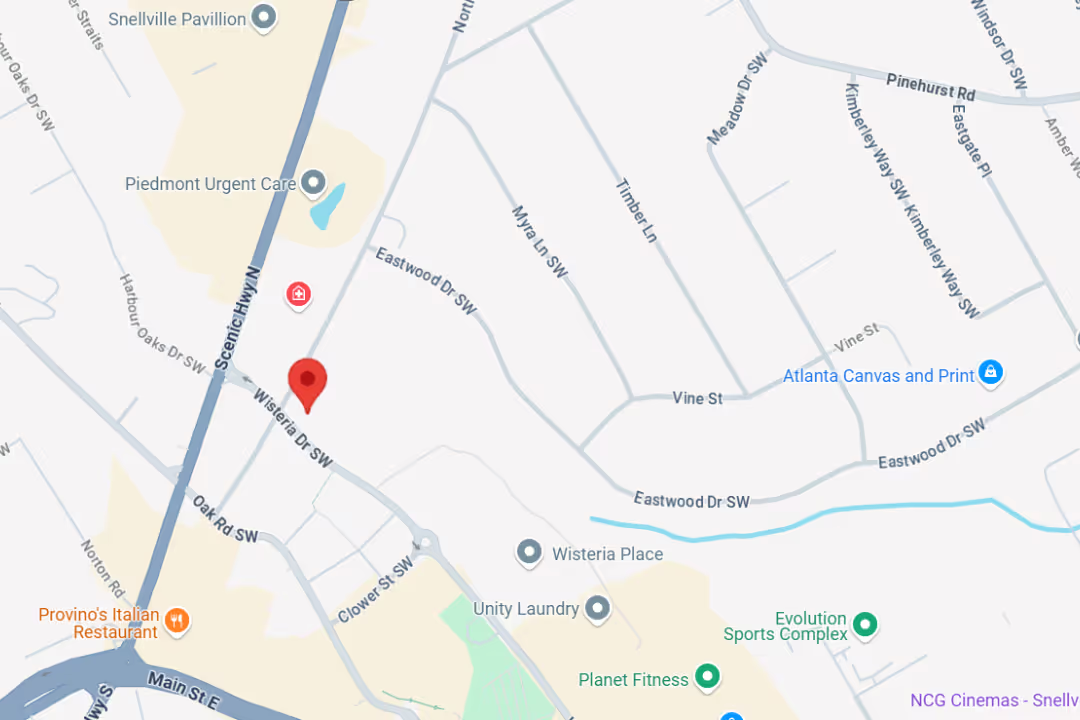
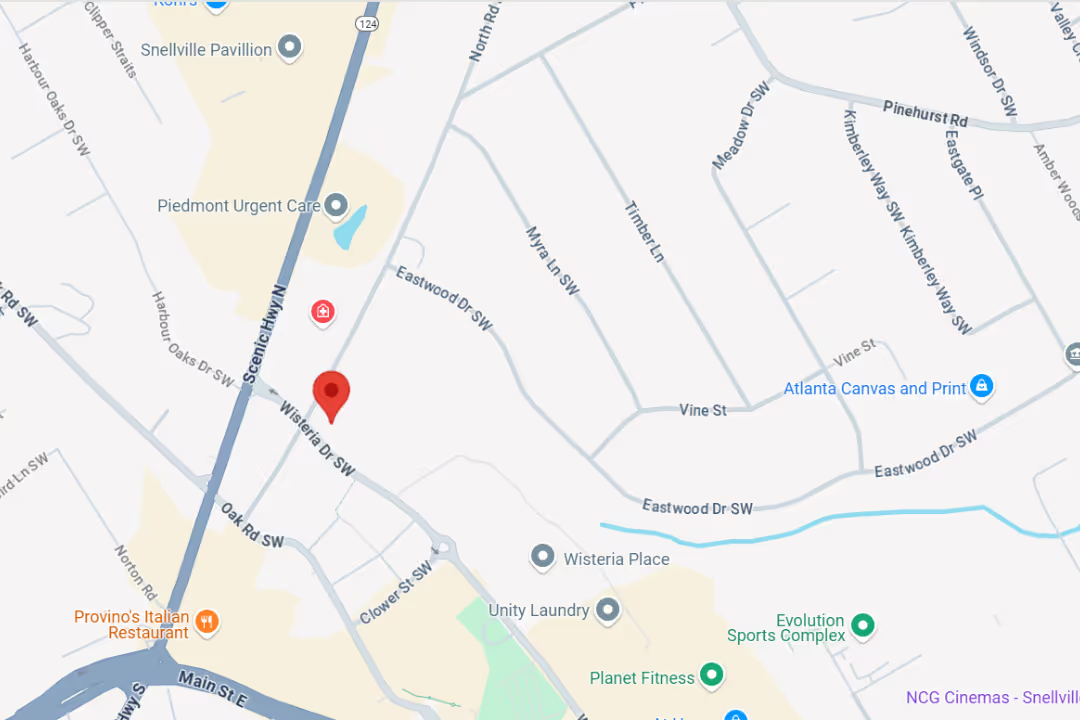
2220 Wisteria Dr, Unit 100
Snellville, GA 30078
(470) 795-8398
Kennesaw
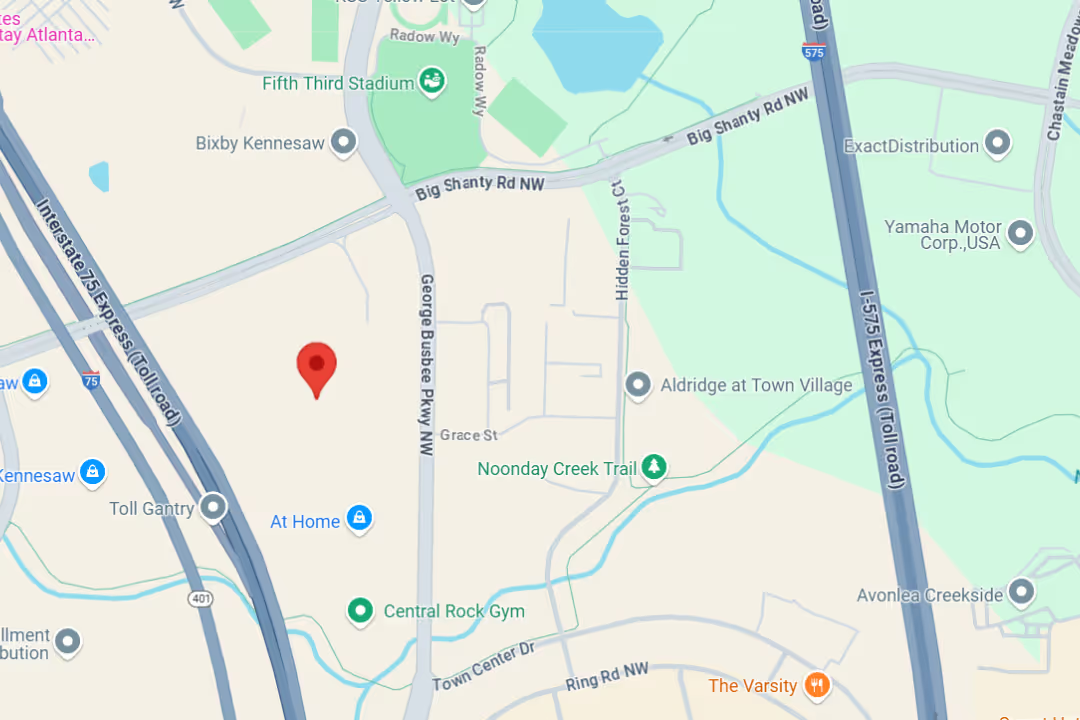
2911 George Busbee Parkway, Suite 50
Kennesaw, GA 30144
(770) 545-6404
Snellville
2220 Wisteria Drive, Unit 101
Snellville, GA 30078
(470) 645-9297
Buckhead PM&R (Atlanta)
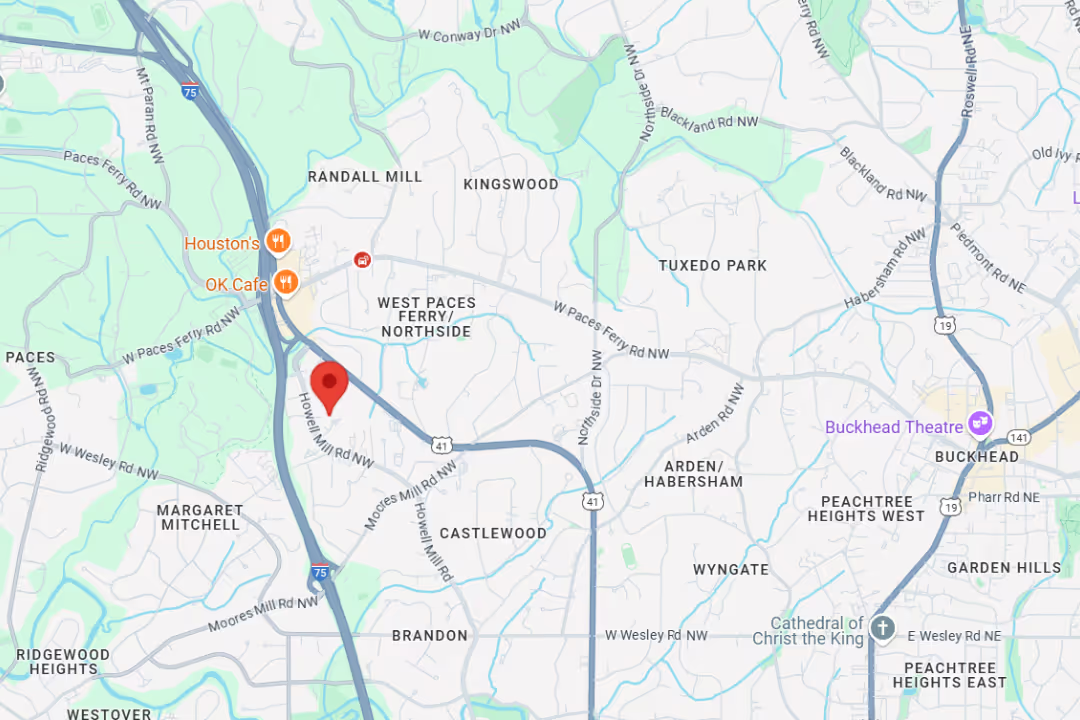
3200 Downwood Circle, NW, Suite 520
Atlanta, GA 30327
(770) 872-7549
At Medici, you’re more than your MRI.
We take time to hear your story, understand your pain, and create a plan that actually works for you.

Our team delivers specialist care at convenient locations across Metro Atlanta:
Get expert tips on injury recovery, pain relief, joint health, and movement strategies—straight from our Fellowship-Trained team.