Hamstring injuries have a way of happening when you least expect them, a sudden sprint, a quick change in direction, or even an overstretch during a workout. One moment you’re moving normally, and the next, you feel a sharp pull or pain that stops you in your tracks.
For many people, the frustration sets in quickly. Whether you’re an athlete, a weekend runner, or simply someone who enjoys staying active, being sidelined can disrupt more than just your routine. Even basic movements like walking, bending, or getting up from a chair can become uncomfortable.
One of the most challenging aspects of a hamstring strain is the uncertainty around recovery. Some people bounce back in a few weeks, while others deal with lingering issues for months. The timeline can vary significantly depending on the severity of the injury and how it’s treated.
The good news is that with the right plan, guidance, and progression, a full recovery is absolutely achievable. Understanding the injury is the first step toward getting back to full strength and confidence.
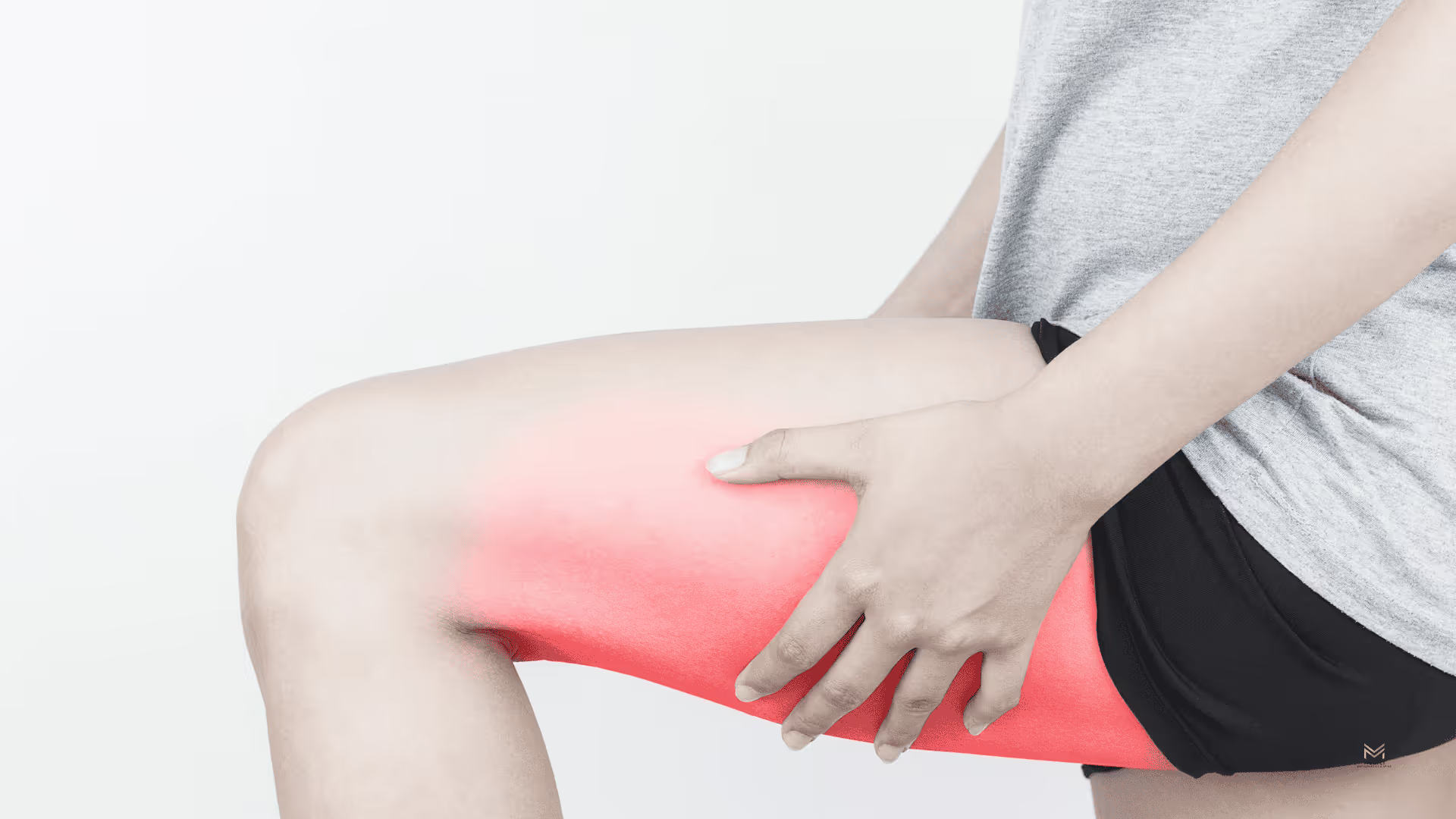
A hamstring strain occurs when one or more of the muscles in the back of your thigh are overstretched or torn. These muscles play a crucial role in bending your knee and extending your hip—movements that are essential for walking, running, and jumping.
A strain can range from small microscopic damage to a complete tear of the muscle fibers. The severity of the strain directly impacts how long recovery will take.
The hamstring group is made up of three muscles:
Together, they work to control leg movement and stabilize the lower body during activity.
Hamstring injuries commonly occur during explosive or high-speed movements. Sprinting, sudden stops, quick direction changes, or overstretching beyond the muscle’s capacity can all lead to a strain.
Many people describe a sudden “pull” or even a popping sensation at the time of injury.
The affected area may become swollen and sensitive to touch shortly after the injury occurs.
With moderate to severe strains, bruising may develop as blood collects under the skin from damaged tissue.
Simple movements can become challenging, especially when trying to fully straighten the leg or bear weight.
Recovering from a hamstring strain isn’t a one-size-fits-all process. It requires a structured, phased approach that allows the muscle to heal properly while gradually restoring strength and function. Skipping steps or progressing too quickly is one of the most common reasons for re-injury.
This initial phase focuses on protecting the injured muscle and minimizing further damage.
The priority is to calm the injury site and prevent worsening of the tear.
Stretching during this phase can aggravate the injury and delay healing. It’s important to allow the tissue to begin repairing before introducing lengthening movements.
Depending on severity, reducing pressure on the leg, sometimes with assistance like crutches—can help protect the muscle.
As pain begins to subside, the focus shifts toward restoring gentle movement.
Light activity helps prevent stiffness and promotes circulation without overstressing the muscle.
Controlled, pain-free movements help maintain flexibility and prevent joint restriction.
Any movement introduced during this phase should be comfortable—pain is a signal to scale back.
Gentle activation exercises begin to re-engage the hamstring and surrounding muscles without excessive strain.
This is where true rebuilding begins. Strength and stability are critical for long-term recovery.
Exercises gradually increase in intensity to restore muscle strength and endurance.
Controlled lengthening exercises (eccentric training) are especially important for repairing muscle fibers and reducing the risk of future injury.
Strengthening the surrounding support system especially the core and glutes—helps reduce strain on the hamstrings.
Stretching can now be reintroduced gradually, ensuring it remains controlled and pain-free.
At this stage, the goal is to prepare the body for real-world movement and activity.
Exercises begin to mimic the demands of your sport or daily activities.
Improving coordination and stability helps ensure the muscle can handle dynamic movement safely.
Running, jumping, or higher-level activities are reintroduced gradually, with close attention to form and comfort.
The final phase focuses on safely returning to full performance while minimizing the risk of re-injury.
You should have:
Even after returning, intensity should build progressively—not all at once.
Continued strengthening, proper warm-ups, and attention to movement mechanics are essential to staying injury-free.
More severe injuries require more time not just for healing, but for rebuilding strength and function safely.
Early intervention such as rest, proper evaluation, and guided treatment—helps limit damage and sets the foundation for a smoother recovery.
Trying to “push through” pain or delaying care can worsen the injury, increase recovery time, and raise the risk of chronic issues or repeated strains.
While rest alone may reduce symptoms, it doesn’t fully restore strength or function. Guided rehabilitation ensures each phase of recovery is approached correctly.
Advancing too quickly—or not progressing enough—can both delay recovery. A structured plan ensures the right balance between challenge and protection.
General health, nutrition, and daily activity levels all play a role. Athletes returning to high-performance demands may require more advanced rehabilitation than someone recovering for everyday function.
Recovering from a hamstring strain isn’t about rushing back as quickly as possible—it’s about healing the right way. Each phase of recovery plays a critical role, and skipping steps or pushing too hard too soon often leads to setbacks that prolong the process.
Patience is one of the most important parts of recovery. When you allow the muscle to heal properly and follow a structured progression, you’re not just recovering—you’re rebuilding strength, stability, and resilience.
If you’re dealing with a hamstring injury or struggling to recover fully, you don’t have to navigate it alone. At Medici Orthopedics & Spine, we specialize in personalized, minimally invasive treatment plans that help patients heal properly, regain strength, and return to activity with confidence.
📞 Call us today: +1-844-328-4624
🌐 Visit us online: https://www.mediciortho.com/
Locations:
Marietta Surgery Center
792 Church Street, Unit 101
Marietta, GA 30060
(470) 795-8398
Snellville Surgery Center
2220 Wisteria Dr, Unit 100
Snellville, GA 30078
(470) 795-8398
Kennesaw Clinic
2911 George Busbee Parkway, Suite 50
Kennesaw, GA 30144
(770) 545-6404
Snellville Clinic
2220 Wisteria Drive, Unit 101
Snellville, GA 30078
(470) 645-9297
Buckhead PM&R
3200 Downwood Circle NW, Suite 520
Atlanta, GA 30327
(770) 872-7549
At Medici, you’re more than your MRI.
We take time to hear your story, understand your pain, and create a plan that actually works for you.

Our team delivers specialist care at convenient locations across Metro Atlanta:
Get expert tips on injury recovery, pain relief, joint health, and movement strategies—straight from our Fellowship-Trained team.