Finding a Fibromyalgia Specialist Near You Who Truly Listens

Living with fibromyalgia means carrying pain that others cannot see—but you feel every moment of every day. It’s waking up exhausted after a full night’s sleep, feeling sore before your feet even hit the floor, and pushing through tasks that once felt effortless. For many people, fibromyalgia is not just physically painful; it is emotionally draining. The constant discomfort, unpredictable flare-ups, and loss of normalcy can quietly wear a person down.

What often hurts just as much as the pain itself is the experience of not being believed. Many patients describe years of being told their symptoms are “normal,” “stress-related,” or “all in their head.” When imaging studies and lab results come back “normal,” it can feel like your suffering is invisible to the very people you turn to for help.

Validation matters. Being heard, understood, and taken seriously is a critical part of healing—especially with a condition as complex as fibromyalgia. This is why finding the right specialist—one who truly listens—can make a meaningful difference in both symptom management and quality of life.

Understanding Fibromyalgia Beyond the Diagnosis

Fibromyalgia is a chronic pain condition that affects how the brain and nervous system process pain signals. Rather than being caused by tissue damage or inflammation that shows up clearly on scans, fibromyalgia involves heightened pain sensitivity—often referred to as central sensitization. The nervous system becomes overactive, amplifying pain signals and making the body more reactive to stimuli that wouldn’t normally cause discomfort.

This is why fibromyalgia cannot be diagnosed with a single test or image. It requires careful listening, detailed evaluation, and an understanding of how interconnected the nervous system is with pain perception.

Common Symptoms That Go Beyond Pain

Fibromyalgia symptoms can be wide-ranging and deeply disruptive, including:

  • Widespread musculoskeletal pain that affects multiple areas of the body
  • Persistent fatigue and non-restorative sleep, even after adequate rest
  • Brain fog (“fibro fog”), including memory issues and difficulty concentrating
  • Headaches and migraines
  • Digestive issues, such as irritable bowel syndrome (IBS)
  • Heightened sensitivity to touch, temperature, light, or sound

These symptoms often overlap and fluctuate, making daily life unpredictable and exhausting.

Why Fibromyalgia Is Often Misunderstood or Misdiagnosed

Because fibromyalgia doesn’t follow the traditional patterns of injury or disease, it is frequently misunderstood. Many patients spend years searching for answers, seeing multiple providers, and undergoing extensive testing before receiving a diagnosis—if they receive one at all. The absence of visible abnormalities can lead to skepticism, rushed appointments, or incomplete care.

Adding to the challenge is the fact that fibromyalgia rarely looks the same from one person to the next. Some patients struggle primarily with pain, others with fatigue or cognitive issues, and many experience a constantly shifting combination of symptoms. This variability makes a one-size-fits-all approach ineffective.

How a Comprehensive Pain Management Team Supports Fibromyalgia Patients

Fibromyalgia isn’t something you “fix” in a single visit—it’s something you manage thoughtfully over time, with a plan that adapts as your symptoms change. A comprehensive pain management team can make that journey feel less overwhelming by bringing structure, consistency, and real support to your care.

Thorough evaluations 

  • A detailed history of your symptoms, flare patterns, sleep quality, stress load, and prior treatments
  • A full-body assessment to identify possible pain generators beyond fibromyalgia
  • Review of imaging and labs when appropriate to rule out overlapping or contributing conditions
  • Screening for common “co-travelers” such as:
    • Myofascial pain
    • Neuropathy or nerve irritation
    • Migraines/headaches
    • Joint or spine-related pain
      • IBS or other sensitivity-related symptoms

Individualized treatment planning

  • A plan built around your primary symptoms—pain, fatigue, brain fog, sleep disruption, or sensitivity
  • Clear priorities (what to address first vs. later) to avoid doing “everything at once”
  • A balanced approach that may combine:
    • Medical options
    • Physical rehabilitation strategies
    • Interventional support when indicated
    • Restorative or regenerative therapies when appropriate
  • Goals that focus on function, not just symptom masking

Ongoing reassessment and adjustment

  • Regular check-ins to evaluate what’s working and what isn’t
  • Plan adjustments based on flare-ups, stress, sleep shifts, and activity tolerance
  • Step-by-step progression that avoids pushing too hard too fast
  • Long-term strategy aimed at reducing:
    • Flare frequency
    • Flare intensity
    • Recovery time after flares

Treatment Options That May Help Manage Fibromyalgia Symptoms

Interventional & Non-Interventional Therapies

Even though fibromyalgia involves nervous system sensitivity, many patients also have specific pain generators (like irritated joints, inflamed soft tissue, or spine-related pain) that make symptoms worse. Addressing those areas can reduce the overall pain load and make fibromyalgia feel more manageable.

  • Targeted injections for pain generators
    • May help when there’s a clear source contributing to pain (for example: facet joint irritation, sacroiliac joint pain, or localized inflammation)
    • Can decrease regional pain that “feeds” flare-ups
    • Often paired with rehab strategies for longer-term benefit
  • Myofascial release and physical therapy
    • Myofascial release may reduce muscle tightness, trigger point pain, and restricted movement
    • Physical therapy can improve stability, posture, and gentle conditioning—without “overpushing”
    • A good program focuses on pacing and consistency, not intensity
  • Neuromodulation approaches
    • Designed to help calm overactive pain signaling in the nervous system
    • May be considered for patients with more persistent symptoms or overlapping nerve-related pain
    • Can support improved function and reduced pain sensitivity over time in select cases

Regenerative & Advanced Therapies

Some patients benefit from advanced therapies that support healing, reduce inflammation, and improve recovery—especially when fibromyalgia overlaps with musculoskeletal injuries or degenerative changes.

  • Regenerative medicine options (where appropriate)
    • May be considered when there are treatable orthopedic contributors (tendon irritation, joint degeneration, soft tissue injury)
    • The goal is to improve the underlying tissue environment so the nervous system isn’t constantly reacting to ongoing irritation
    • Best used selectively, as part of a broader plan—not as a standalone “cure”
  • Hyperbaric oxygen therapy for inflammation and healing support
    • Some patients pursue hyperbaric oxygen therapy to support tissue recovery and reduce inflammatory burden
    • May be especially appealing for individuals dealing with chronic inflammation patterns, slow healing, or recovery plateaus
    • Typically used as an adjunct therapy within a comprehensive care strategy

Medication Management—When Necessary

Medication can play a role—but the best fibromyalgia care avoids making medication the only plan. A thoughtful specialist uses medications conservatively and strategically, with the goal of improving function while minimizing side effects.

  • Thoughtful, conservative use
    • Targeting the most disruptive symptoms first (sleep disruption, nerve sensitivity, pain flare patterns)
    • Regular review to confirm benefit and reduce unnecessary prescriptions
    • Adjustments based on real-life response, not “set it and forget it”
  • Avoiding over-reliance on sedating or addictive medications
    • Over-sedation can worsen brain fog, fatigue, mood, and daily performance
    • Long-term dependence risks can increase when medication becomes the only tool
    • A balanced plan prioritizes therapies that restore function while reducing the need for stronger medications over time

Restoring Daily Function

For many patients, success isn’t just “less pain”—it’s being able to live more normally again. Restoring daily function is often the most meaningful goal, and it usually comes from consistent, layered improvement rather than one dramatic change.

  • Improving sleep quality
    • Better sleep can reduce pain sensitivity, improve mood, and decrease fatigue
    • Support may include sleep routine strategies, nervous system calming techniques, and symptom-targeted care
  • Increasing tolerance for activity
    • Building stamina carefully so movement becomes safer and less threatening to the nervous system
    • Progressing at the right pace to avoid crashes and setbacks
    • Focusing on gentle consistency: mobility, stability, and low-impact conditioning
  • Reducing flare-up frequency and intensity
    • Identifying triggers (stress, poor sleep, overexertion, certain movements, prolonged sitting/standing)
    • Creating a plan for “early intervention” when flares start
    • Using a combination of therapies that support steadier days and faster recovery after setbacks

You Deserve Care That Truly Listens

Fibromyalgia pain is real. Its impact on your body, energy, focus, and emotional well-being is real—and it deserves expert medical attention grounded in compassion and understanding. If you’ve spent years feeling dismissed, rushed, or told that “nothing is wrong,” it’s important to know this: you do not have to settle for that experience.

The right care doesn’t begin with assumptions or quick prescriptions. It begins with listening. It begins with taking your symptoms seriously, recognizing the complexity of fibromyalgia, and creating a plan that respects both your nervous system and your life. Compassionate, advanced, least-invasive care does exist—and when it’s done well, it can help patients feel supported instead of sidelined.

If you or a loved one is living with fibromyalgia and searching for a specialist who truly listens, the team at Medici Orthopaedics & Spine is here to help. Our physicians take the time to understand your story, your symptoms, and your goals—then build a personalized, minimally invasive treatment plan focused on restoring your quality of life, not just masking pain.

Contact Medici Orthopaedics & Spine

📞 Main Appointment Line: 1-844-328-4624
🌐 Website: https://www.mediciortho.com

Clinics

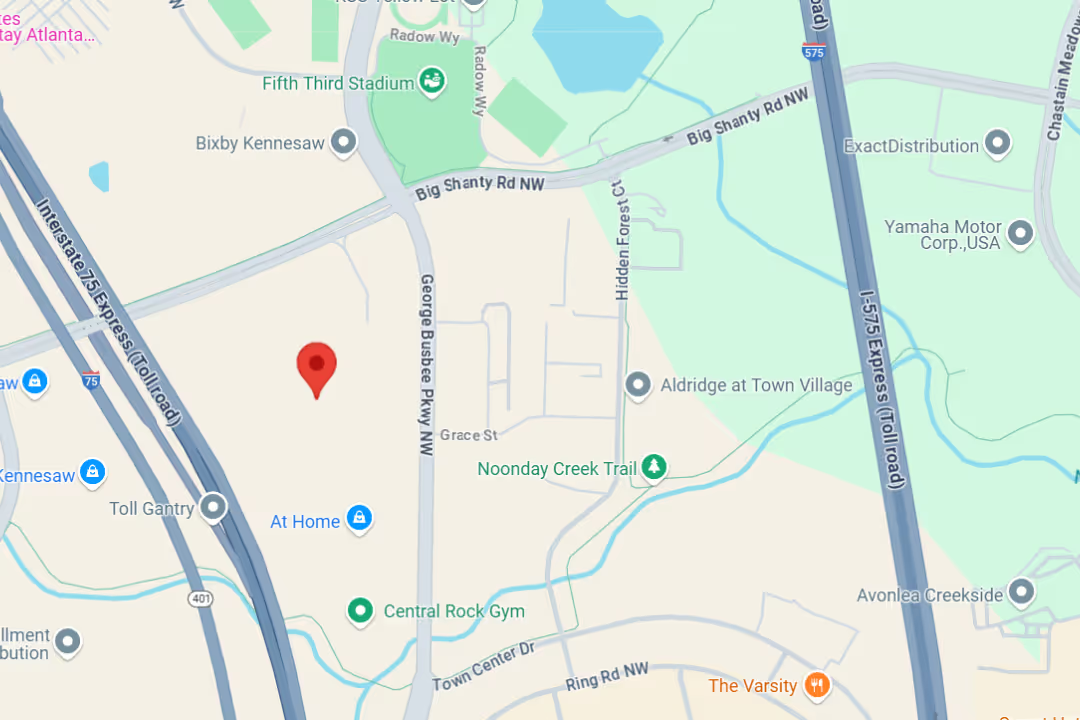
  • Kennesaw:
    2911 George Busbee Parkway, Suite 50, Kennesaw, GA 30144
    (770) 545-6404
  • Snellville:
    2220 Wisteria Drive, Unit 101, Snellville, GA 30078
    (470) 645-9297
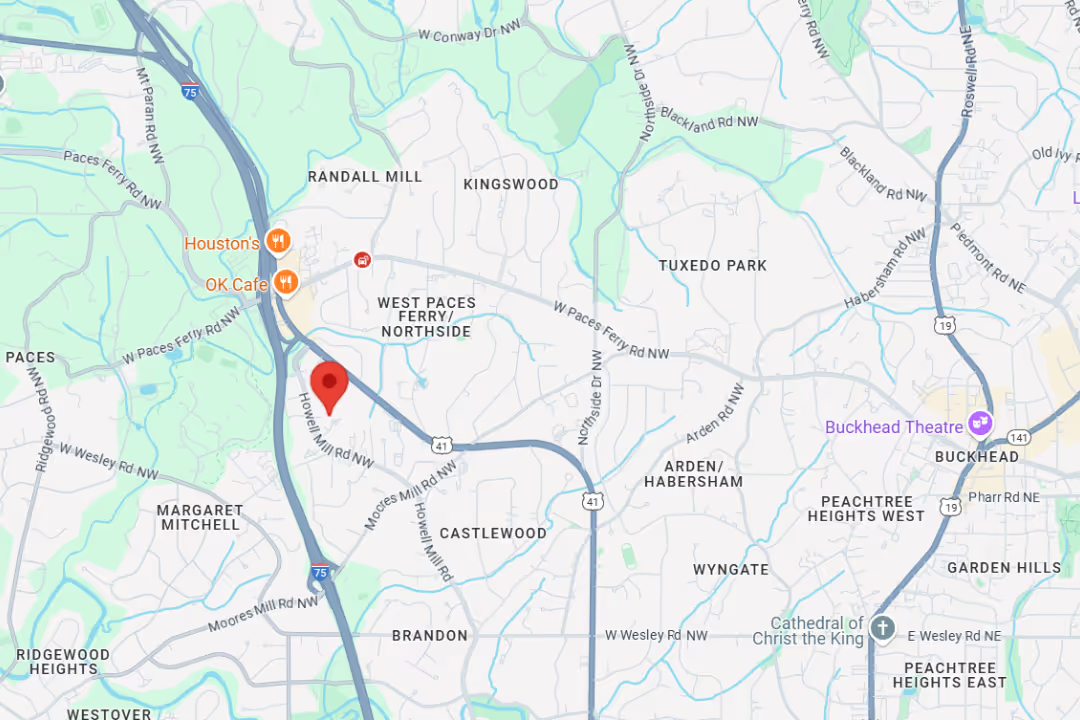
  • Buckhead PM&R:
    3200 Downwood Circle NW, Suite 520, Atlanta, GA 30327
    (770) 872-7549

Tired of Feeling
Like Just Another
Chart?

At Medici, you’re more than your MRI.
We take time to hear your story, understand your pain, and create a plan that actually works for you.